How Can You Walk Away?

By Adele Rickerby

The tragedy of Romanian mother’s abandoning their babies.

According to data published on the website of the National Authority for the Protection of Children’s Rights and Adoption, (A.N.D.P.C.A.) two hundred and seventy six babies were abandoned by their mother’s in Maternity hospitals and other health facilities in the first nine months of 2022. Forty-eight less than the similar period in 2021. Of these, two hundred and twenty were left in Maternity wards, fifty-four in Pediatric wards, and two were left in another hospital ward. One hundred and three were returned to their families, two were placed with the extended family, fifteen with families/individuals and one hundred and thirty-four were placed with foster parents.

According to U.N.I.C.E.F Romania, (the United Nations Children’s Fund), one in ten pregnancies in Romania are teenage mothers and that poverty is one of a number of risk factors.
The following reports, Authored by; Andrea Neculau, Diana Negut, Mihai Vacaru and Cristina Vladu states that ”Teenage pregnancy in Romania is a complex social phenomenon”.

  1. UNICEF Romania County Reports on teenage mothers
    1. Policy framework to prevent teenage pregnancy and its consequences
    2. POLICY BRIEF: Prevention of teenage pregnancy and its consequences

Save the Children Romania reports that forty-five percent of the births registered among girls under the age of fifteen in the European Union, of which there are twenty-seven countries, are in Romania. This number is the highest in the European Union. Romania also ranks highest in the E.U. in terms of infant mortality, the main cause being premature births.

In collaboration with the O.M.V. Petrom Foundation, Save the Children Romania have launched the ”Baby Box” program, which aims to reduce infant mortality and support families immediately after birth.

https://www.salvaticopiii.ro/ce-facem/Sanatate/Cutia-bebelusului

According to statistics from the A.N.D.P.C.A. Website, the number of babies abandoned from January to December 2020, was four hundred and thirty-one. The numbers for 2023 are significantly lower.

You can find official statistics at the following link https://copii.gov.ro/1/date-statistice-copii-si-adoptii/ at category „Copii Părăsiti în Unitățile Sanitare”.

Children of Decree 770. by Adele Rickerby

This is what happened in Romania when Abortion was banned.

Photo of an abandoned child in a cot in the Institute for the Unsalvageables located in Sighetu Marmatiei, a town in Transylvania at Romania’s Northern border with Ukraine. 1992. Copyright, Thomas B. Szalay photography.

On the first of October, 1966, Nicolae Ceausescu enacted Decree 770, which caused untold suffering for the women and children of Romania.

Decree 770 declared abortion and contraception illegal, except for women over forty-five, women who had already borne four children ( later raised to five), women whose lives would be in danger if their pregnancy were to go full-term, and women who had conceived through rape or incest.

In 1966, the population of Romania was approximately nineteen million. With decree 770, Ceausescu’s aim was to increase the population to thirty million by the year 2,000, in the belief that population growth would lead to economic growth. By 1976, the population had increased to approximately twenty-one million. An increase of about two million or twelve percent.

Women of child-bearing age were subjected to monthly gynaecological examinations to monitor a pregnancy or ensure that an illegal abortion was not carried out.

There was a monthly tax on childless people twenty-five years and over, married or not.

Any doctor convicted of performing an illegal abortion faced a jail term of between ten to twenty years. Despite this, illegal backyard abortions took place, sometimes resulting in sterility, infections and even death.

During these dark days of Communism, thousands of babies were abandoned by their impoverished parents into State-run institutions. After Ceausescu and his wife, Elena were executed by firing squad on Christmas Day, 1989, journalists from around the world descended on Romania and discovered the horror of these institutions. Approximately one-hundred thousand children had been abandoned in these institutions, where children were malnourished, neglected and physically and sexually abused.

Children born during this time were called ”Decretei”, children of the Decree. Decretei comes from the Romanian word ”Decree” meaning ”Decree”.

Empty shop shelves and queues for food were common during Communist era Romania. Lack of food meant malnourished mothers gave birth to premature and underweight babies. Hospitals fed these babies intravenously with unscreened blood. Hypodermic needles were in short supply and used over and over again without proper sterilisation. As a result of which more than ten thousand babies were infected with H.I.V causing an epidemic of A.I.D.S.

Once a baby or child had been abandoned into a hospital or institution, it was uncommon for biological parents to visit on a regular basis or to take their child back home.

thepromisekept.co is my facebook page where I share posts to the global community about Non Government Organizations working on social justice issues such as; child abandonment, poverty, education, and human trafficking.


Born to Defeat

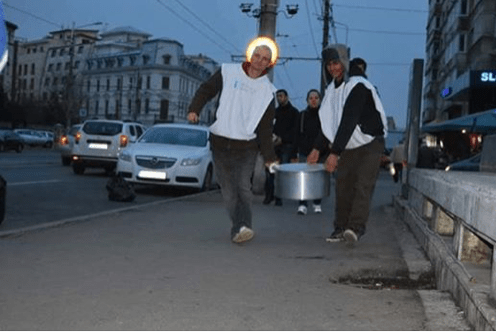
Born to defeat; the incredible life story of the young man raised at the orphanage and who now provided a warm meal for the homeless of Bucharest.

Story by Ramona Raduly. https://life.ro Stories to Inspire. Society and Culture.

Gabriel Ciubotaru was born the day after the devastating earthquake of 1977. He opened his eyes to the world for the first time in a near ruined Bucharest, and this was to predict his destiny. His mother was an artist, the father an airline pilot. His father died in an airplane crash. When he was just ten years old, his mother also died from the rottenest of the Communist regime; she had been diagnosed with an extra-uterine pregnancy that had to be aborted, but for this, a commission was needed and abortions were not allowed at that time. Until the answer came, his mother died, and after this second great tragedy, Gabriel was taken to the ”Children’s Home”.

His years of school and adolescence were sprinkled with everything, and good and bad, but he grew up, learned, finished College and a Master’s degree and now helps the little ones. He founded the Association; ”Your Chance” with which he carries out many good deeds projects, but the dearest of his soul is ”A Warm Chance”, with which, for more than eight years, he provides a warm meal to the homeless of Bucharest.

An incredible story. A true story that could one day come to the page of the book ”Born to Defeat”.

”What does a day in your life look like today?”

”First of all, I don’t think that there are any significant differences between my program and those of other people, more or less ”N.G.O’s. This list probably sounds familiar to you; sleep, healthy eating, family, career, sports, reading, writing, travel etc. What is different from what I did five years ago is definitely a much better organisation, which helps me to better distribute the twenty-four hours of my life.

The sun shines above my house, I start my day with optimism, I carry out all the procedures I do in the morning, after which I eat and start work; I answer emails, I read correspondence, I answer telephones, counselling, conferences, meetings with collaborators, etc.and we solve the cases that come or are being finalised, I visit the social centres, I go to get donations from where people want to donate. Depending on the day, we prepare various projects, but the evening comes quickly over us. And because the summer is much longer, I have time to walk on the forest path, to relax and to think about my life.

I still visit the beneficiaries; for example today I was with a father and four of his ten children to see their mother in a penitentiary. I also read Ionut Ursu, the young man raised in an orphanage who has been volunteering in Nepal for five years. How did a child who, until he was eighteen, was told that he would die of A.I.D.S to build the first dental practice in Nepal?

”What are your current projects?”

A Warm Chance, Smile From the Box, Camp of Your Life, Requirements for Your Future, Helmut Schlotterer Social Centre.

”What is the dearest, closest project to your soul so far?”

The project ”A Hot Chance”.

”When you were a child, what did you dream of doing?”

My dream was to be a driver for salvation, to save people, but with the time and experience gained, I could say that I fulfilled this dream to help people. I didn’t think then that I could do so many things. Now I want to be a man to help people and to fill my parental void- the lack of a family, helping those in need. If you are not well anchored in your values, you may be living the dream of someone else, (society, parents, friends, boss.)

”What happened to you at the orphanage?”

After my mother’s death, I went to the orphanage called St. Stephens Children’s House. It has now been abolished. There were one-hundred children, each with his life story. Relatives took me there. They probably couldn’t afford to keep me. I was in school, in fourth grade in Sector One when my mother died. At the orphanage, we tried to organise the birthdays of my colleagues every month. We went to camps, we also had difficulties with the biggest ones who beat us. The desert was a luxury for us, fearing that the bigger ones will take it. But I was running from the placement centre and going to hospitals, and the doctors were protecting me and I was admitted for a few days. When I returned, they didn’t take much notice of me, because I told the Director and I was running away.

I learned a job, I finished school, we had good educators who helped us with lessons, they were beautiful memories. When the holidays came, then I was suffering, because most were leaving to go home and nobody came for me. I kept wondering if, as far as this big world was concerned, there would be no family for me. I was crying and calling out to God.

The Revolution came, the foreigners came with help and I started to grow. To grow old and to forget about the lack of family. We changed the room with furniture from donations, we dressed differently, we received oranges, we made juice. We slept six-eight children in a room. There is a lot to tell and I have not yet found anyone to help me finish my book ”Born to Defeat”.

I was organising trips. I remember that I went to a Children’s Centre in Busteni where there were three hundred children. I talked to them and it was an exchange of experiences.

”How were your school and teen years?”

The years of school and high school are unforgettable; full of joy, smiles, ears, emotions, years when I was part of a great and wonderful family. I remember with fondness the first day of school when, full of emotion, I went to class together with the teacher, a second mother to me, full of warmth and kindness, who loved us enormously and did everything she could to help us. She was the one who showed us, for the first time, with great patience, the magical powers of the pen, and the one who helped us choose the best path in any challenge we had. Even though I was in the more energetic group and I was upset about the lady teacher, she always had the power to understand us and to forgive us very easily. The day I finished fourth grade was full of strong emotions, both happiness because I was starting a new chapter in our lives, and sadness due to the separation from the lady teacher. I remember how many hugs, flowers and tears there were.

For me , the hardest stage in my life was in grades V-V111 and in High school when I felt alone in the world. But I learnt, worked hard to get somewhere, despite the obstacles in life. Thus, with the beginning of 5th. grade, I embarked on a new adventure of my life. We were all scared and curious at the same time. The years of Highschool proved to be wonderful and I learnt a lot of new things. Each teacher took care to teach us both lessons related to the subject taught and life lessons. I remember with joy the wonderful teachers we had, with all the defining gestures, how to teach and make us easily understand what they want to teach us and all the passion they had, each of them for own matter. I was forced to change High school but I quickly made friends. The school was in the orphanages yard, and my bedroom was facing the school yard, a wonderful view; I could see when children were leaving or coming to the school, and when the yard was filled with children, I was motivated to learn and to move on.

In school, I connected with beautiful friends. We were surrounded by two different worlds- children from families and those from the placement centre. I was watching and seeing the differences. Even though the children in the families were poor, they were more educated, but we from the centre were happier because we lived permanently in the community.

But the nucleus of life forms in the family. I did not understand then that there is another world.

”Who trained you to become a man today?”

People come and go from your life. Many special people have passed through my life, but some people remain for the rest of my life in my heart and mind. Every person who goes out of your way puts a brick in your character. It is not one particular person who trained me, it is a labyrinth of people, from my mother, educators, teachers, my aunt, to new people who came into my life after I opened the ”Your Chance” Association. Several doors opened to me. I got in touch with another kind of people, more responsible, serious. Also, every thank you from an orphan child or a child from a poor family has given me hope to move forward, change destinies and train at the same time.

I can remember a few people; my wife Gabriela, my aunt and my niece, Casiana Fometescu, Carmen Stoica, Diana Milea, Andrei Stan, educators, Mrs Mihai, Physics teacher, Aikido coach, Mr Grigorescu.

”When did the idea of helping sprout in your mind?”

A psychologist told me that God has put in me a special seed, to help people, because not everyone can do this because it is difficult to work with people. I liked to help as a kid, even though I grew up in an orphanage. After ’89, I was a volunteer at various N.G.O’s, such as YCC Romania,(Love and Home for Children), UNICEF, Ovidiu Rom, Alinare Foundation, etc. I was involved in all kinds of projects, from building houses, painting and offering clothes and accessories to counselling etc.

”And why do you do that?”

I help because I feel good about what I do, it’s a lifestyle, a passion, like medicine or other specialities, it’s a calling. By doing good things for others, your self-esteem will increase and you will have the satisfaction that you have given, that you give people a chance to be more responsible and to value your help. When you help, you take the burden of the beneficiaries soul, but give it the power it needs to recover. You can be an example to others and try a state of joy and fulfilment. Because when we help, we can make amazing things happen by pushing those in need to be happy.

”What is your motivation?”

When I give, I feel happy, and especially when I see others happy. As I am connected to the needs of poor people, with those who want to help, I am glad that I can be a bridge between the poor and the helpers.

”Were there times when you cursed your fate? Or on the contrary, do you thank God for living and being healthy?”

I thank God for giving me this opportunity to move forward. It is not easy. There are all kinds of obstacles in life. I had moments when I was about to give up, but Heaven always lifted me up and gave me the power to move forward.

”What’s your biggest regret in life?”

My regret is that I didn’t have my parents near me to see how I grew up and be satisfied with myself. I can’t speak well in words, but I think life gives you a lemon and you have to make lemonade. I was pleased with what I had and my regret is that I am too open and exposed to less good people. I can make mistakes but I also learn something from it every time.

”What makes you happy?”

If you fail to make a lifestyle out of being happy, because happiness is from God. It activates according to your state and your involvement in helping others. Let me throw away all the useless things and keep only the essentials. To read and learn new things, not to upset anyone and see happy people.

”What does ”Your Chance” mean?”

The Association ”Your Chance” was born from a desire to give a chance to everyone in need. To be a chance for both the people who want to help and for those who receive. Why is ”Your Chance” the expression that gives you the power to move forward even if you are going through difficult times in your life? Because we all have a chance in life and it’s a pity to waste it and not use it to do good.

http://www.asociatiasansata.ro

Investigations-Child Trafficking, Romania

HEALTHSocialSOCIAL & HEALTH.   

LabMin: “There are suspicions of trafficking children in orphanages. Investigations are ongoing” July 18, 2016

There are suspicions of trafficking children in some orphanages in Romania, Labour Minster Dragos Pislaru told a TV show on Sunday.Labour Minister also stated that he received this information from the intelligence services in May, when he took office. At the moment, there are ongoing investigations in four or five orphanages “from the South of the country”.

“I have several cases in the South-East of the country, in which there are suspicions of trafficking in human beings and of prostitution, related to the institutions hosting children. I’m talking about the state institutions in which there is a suspicion that trafficking in children existed. Foster homes, orphanages”, stated Dragos Pislaru for Digi 24.

He also said that many children from the Romanian orphanages are sedated with strong medicines having similar effects to drugs.

“Information will reach to the public opinion after we will see that the evidences are prepared”, Pislaru added.

The shocking statements are coming after about two weeks since seven employees of the Sfanta Maria Social Services Complex within the General Directorate for Social Assistance and Child Protection of the Sector 1, have been remanded by the Court of Bucharest. They are accused of maltreatment of a minor, abuse of office and embezzlement.

Last year only, 1,555 children reached to be cared for by the state.

“There are 1,100 public institutions in Romania in which children not cared of by their parents are protected. Since we reestablished ourselves, we perform inspections. We face relatively frequent with complaints coming from employees, from children or from parents; not all of them are that important as the ones mentioned by Minister Pislaru, but we had this kind of complaints also – trafficking. We sent them further, on our turn”, stated the President of the National Authority for Child’s Rights’ Protection, Gabriela Coman.

The actions this institution can take following an inspection are related to seizing the criminal investigation bodies, who verify such suspicions, she mentioned. “Further, the complaints related to abuses such as tying children or violence against children performed by the employees are immediately seized to the President of the County Council, who is the employer of the personnel in these centers and who can take the adequate measures”, Coman added.


Romania Reborn; 8 Things You Should Know About Romania’s Child Welfare System

8 Things You Should Know about Romania’s Child Welfare System

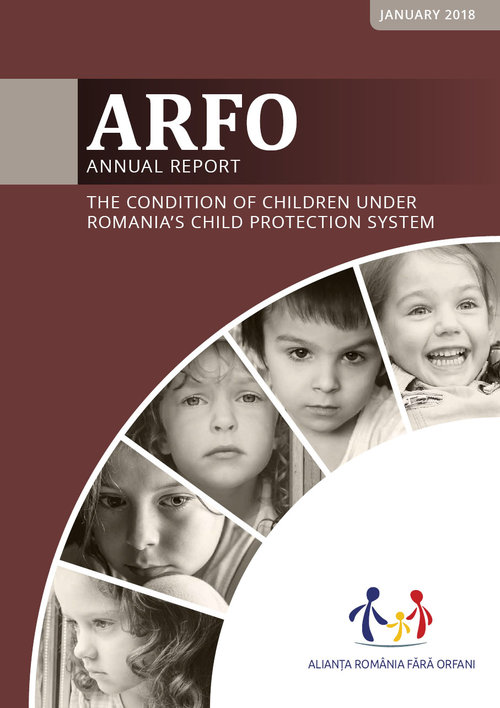
ARFOreportcover.jpg

In November 2017, the Romania Without Orphans Alliance (ARFO) published its annual report on the condition of children living in Romania’s child welfare system. An English-language version came out in January.

The 24-page report—beautifully designed with photos, charts, data, and analysis—provides a devastating look at the state’s care for parentless children. We’re quite proud of this body of work as a reflection on ARFO, which we helped found, and which our supporters have helped fund.

Here are eight quick takeaways from the report;

1. Child abandonment is an ongoing and serious problem.

Although Romania’s population is declining, the number of children entering its child welfare system has stayed steady at around 10,000 per year. ARFO uses government data to show that it’s not just poor areas driving this problem. The capital counties of Bucharest-Ilfov made the top-10 list for both numbers of children in the system and for percentage of children in institutions. One sector of Bucharest had an alarming 59% of children in its system housed in institutions.

2. Most children who enter the system remain there until adulthood.

Of the 10,000 children abandoned each year, around 6,000 will stay in state care. “On paper, Romania’s Child Protection System offers a child temporary intervention until they are reintegrated into their biological family, or placed in an adoptive family,” ARFO president Liviu Mihaileanu writes. “In reality, this ‘temporary intervention’ usually lasts until they become an adult.”

3. Adoptions are all too rare.

A chart from the ARFO report shows the decline in adoption.

In 2016, only 788 children were adopted in Romania—a mere 1.3% of children in the system. This was the second-lowest number on record since at least 2000, but numbers are abysmal across the board. ARFO cites an anti-adoption bias from many state workers, who look askance at the practice of putting children in legal placement with families who want to adopt them.

A chart from the ARFO report shows the decline in adoption.

4. Even when families are available, the state keeps children in orphanages.

State workers often view children in orphanages as “solved cases,” with no further intervention or family placement needed. Sometimes they actively fight the removal of children from institutions. The ARFO report contains a firsthand account from one NGO worker who requested to take a child from an orphanage into placement. Not only was she denied, but her NGO’s work at the orphanage was threatened.

A 2016 law requires the government to declare abandoned children legally adoptable after 6-12 months, depending on circumstances. Yet this law is simply being ignored by case managers. Over a year later, only 1.5% of the children in Romania’s institutions have been declared adoptable.

Adoptability stats from the ARFO report. The number of adoptable children in institutions is especially troubling, given how clearly institutionalization is proven to harm children.

Adoptability stats from the ARFO report. The number of adoptable children in institutions is especially troubling, given how clearly institutionalization is proven to harm children.

“Case managers usually work for the same local government agency that is receiving funds to house the children,” ARFO notes. “Therefore, one may conclude that such a practice is intentional to secure staff and funding.” ARFO calls for legal sanctions against workers who fail to carry out the law, and who misinform and intimidate families seeking to remove children from institutions.

5. Children suffer from moves within the system.

ARFO decries the trauma of moving children in state care from place to place. They are especially concerned about the practice of placing children in foster families until age 3, then moving them to orphanages. Under Romanian law, no child under 3 may be placed in an institution, so the government often “rotates out” children when they get older. ARFO recommends a ban on moving a child from family care to an institution, except in exceptional circumstances.

ARFO5years.jpg

6. The state has no minimum standards governing family placement.

The government was supposed to publish standards in 2012 for family placement, the practice where children are placed with an unpaid foster family or birth relatives. Five years later, there are still no standards. Failing to evaluate and oversee children placed with birth relatives is dangerously negligent. ARFO recommends that the state create minimum standards as quickly as possible.

7. The state holds charities to strict standards its own agencies don’t meet.

The report notes: “While NGOs are not permitted to function in Romania without a license, only 17% of public social services are licensed. The rest function without meeting the minimum standards that all NGOs must meet to provide the same services.” ARFO decries the state’s monopoly over child welfare, where NGOs’ contracts can be canceled at will. The report calls for greater cooperation between the state and charities.

8. A number of positive developments have laid the groundwork for change.

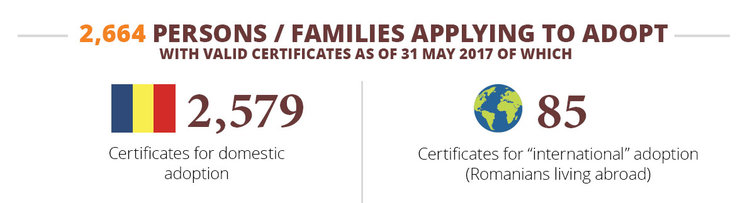
ARFOadopterschart.jpg

It’s not all bad news. First, the number of families certified to adopt is rising (currently over 2,600 families), indicating a growing interest in adoption. Second, the state has developed a list of “hard-to-place” children, allowing prospective families to view their profiles, which humanizes the process and encourages adoption of hard-to-place children. Third, the growing number of adoptions to Romanians abroad could provide the foundation for re-opening intercountry adoption. With real reforms, Romania could do much better for its children.

Support the work of ARFO by giving to our “Romania Without Orphans” fund.

Alex Kuch; How International Adoption Changed My Life

Romania’s Last Orphanages

http://www.hopeandhomes.org/news-article/economist-film/

@TheEconomist has visited @HopeandHomes projects in Romania to create a film examining how we’re finding families for the 7,000 children who remain in ‘Romania’s Last Orphanages’ https://buff.ly/2nn16YQ #FamiliesNotOrphanages

HOPEANDHOMES.ORG
Hard hitting film by the The Economist exploring the rise of the terrible orphanage system in Romania and explaining why Hope and Homes for Children is determined ‘Romania’s Last Orphanage’ should close.

Hope and Homes for Children’s work in Romania is central to a hard-hitting new film, released today by The Economist.

Available here. ‘The End of Orphanages?’ focuses on the transformation that’s taken place in Romania’s child protection system in recent decades.

Viewers are reminded of the horror of the Ceausescu-era orphanages that were discovered after the fall of the dictator in 1989 and goes on to explain how the majority of the county’s orphanages have now been closed by ensuring that children can grow up in family-based care instead.

Hope and Homes for Children has played a fundamental part in driving the process of child protection reform in Romania over the last 20 years. When we began work there in 1998, over 100,000 children were confined to institutions. Today that figure has fallen by more than 90% to less than 7,200.

The Economist film tells the story of Claudia, a woman in her late 30s who was born with one arm and abandoned to the orphanage system as a baby. She shares painful memories of the abuse and neglect she suffered as a child. She struggles to remain composed as she describes one incident where she was stripped and beaten with a rope as a punishment for playing in the wrong place.

“Effectively we belonged to no one. You were basically treated like an animal” she says.

Today Claudia works in the Ion Holban institution in Iasi County – one of the remaining orphanages that Hope and Homes for Children is working to close in Romania. The film shows some of the children who have already been supported to leave the institution and join families.

The Manole sisters spent five years in Ion Holban after their remaining parent died. Our team gave their extended family the extra support they needed to make it possible for all four girls to leave the orphanage and begin a new life together with their Aunt and Uncle.

Stefan Darabus, our Regional Director for Central and Southern Europe, contributes to the new film, explaining “Any institution like Ion Holban should be closed. They do not offer family love. They do not offer what a child needs most which is to belong to a family, to have a mother and a father, to feel special.”

The film gives a balanced view of the process of deinstitutionalisation, pointing out the risks to children if the process is not properly supported but gives the last word on the future of the children in the Ion Holban to Claudia. “What they need is such a simple thing,” she says. “Parental love in the bosom of the family, rather than in the bosom of the State. But mainly they need to be accepted.”

E.U. Funds Used to Close Fifty Orphanages in Romania

access antique bolt close
Photo by Pixabay on Pexels.com

EU funds will be used to close 50 Romanian orphanages

The Government of Romania has confirmed that it will use European Union funds to close 50 state orphanages and other residential institutions for children. The closures programmes will take place across the country, in seven out of eight regions, and include institutions for children with disabilities.

As part of Opening Doors for Europe’s Children, our pan-European campaign with Eurochild, Hope and Homes for Children has played a key role in securing EU funding for child protection reform across Europe and ensuring that the money is specifically ring-fenced for closing institutions and supporting families.

Adrian Oros, National coordinator of Opening Doors in Romania said, “This is an important step in the reform of the child protection system in Romania. The long-standing governmental declarations to close all institutions by 2022 are getting gradually translated into action. Especially commendable is the fact that a third of the old-type institutions in Romania that have been listed for closure by the Government in May 2017 include institutions for children with disabilities. This group of children make up almost 60% of all the children who remain in Romanian institutions. The time to ensure their right to live in more inclusive, supportive and caring communities is now.”

Although Romania has made great progress in reforming its child protection systems over recent decades, there are still 7,500 children living in the 191 remaining institutions. Johnny is one of these children. He loves football and being outside but he spends most of his time indoors because he uses a wheelchair and the orphanage where he lives has few ramps and no lifts. Johnny was separated from his younger brother and his father when his mother died and his family could no longer care for him without support.

Screen Shot 2017-12-09 at 15.44.02Hope and Homes for Children is working to close the institution where Johnny lives by finding safe and loving family-based care for all the children living there. The news that EU funding is now available to support this and 49 other closure programmes marks a significant step towards the day when all children in Romania can grow up in families and not in orphanages.
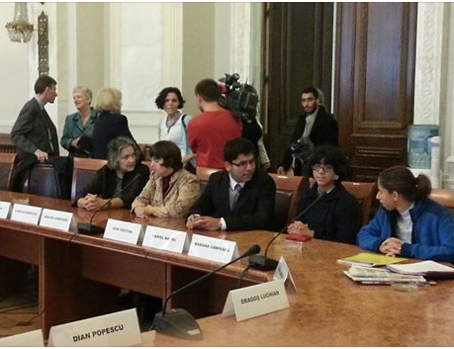
Hope and Homes For Children; Romania. Deinstitutionalisation

In 2018, almost 6,500 children in Romania still live in institutions, which are inappropriate for their development.

Reports of sexual abuse, physical abuse, emotional abuse, child-trafficking and suicide, consistently appear in the media regarding the abandoned children in these institutions.

Over the past twenty years, Hope and Homes for Children, Romania, has closed 56 institutions, including the Nassau Foster Centre, and built and moved institutionalised children to one hundred and four family type homes.

http://www.hopeandhomes.org/news-article/mark-and-caroline-romania-honours/


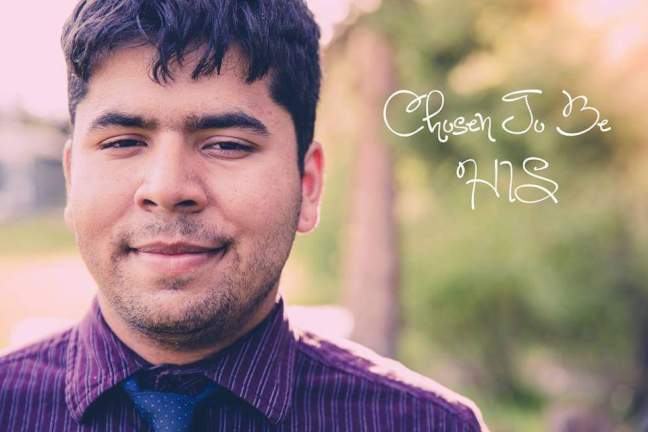
Romanian Adoptee Defies The Odds To Complete A Degree

Alex was only eighteen years of age when he made his first trip to Romania to speak to the Parliament to advocate for the reopening of International Adoptions from Romania.

When Romanian orphan Alex Kuch was adopted at age two, his new family was told he would never finish high school or lead a normal life.

This week, Alex finished his final semester of a Bachelor of Arts degree in Politics and International Relations with a minor in Sociology at the University of Auckland.

Now 23-years-old, Alex is an established children’s rights advocate and is invited to speak around the world. Next month, he will co-present research into the experiences of adoptees at a major international conference in Canada.

“My parents weren’t going to let a prediction determine who I was going to become,” Alex says. “While never pushing me, they always encouraged me to give my best in everything I did. My family is really proud, especially as I’m the first person in my family to go to university. I’m really looking forward to using my degree in the real world.”

Alex will be one of the youngest presenters at the sixth International Conference on Adoption Research in Montreal and has received a grant from the University of Auckland’s Vice-Chancellor’s Student Support Fund to attend.

His research, completed with Dr Rhoda Scherman from AUT, analyses the stories of other adoptees shared on the New Zealand-based I’m Adopted website.

“The stories have helped us to pull together the common themes of what adopted children go through. It’s valuable knowledge for agencies and families, for example knowing when to intervene or what to expect, and to provide better support.”

Alex was adopted in 1997 from an orphanage in Cluj- Napoca, Romania by a German couple. He also has a younger brother adopted by the same family. The family moved to New Zealand in 2006.

At the time of his adoption, a German psychologist advised Alex’s family that the emotional damage from spending his formative years in an orphanage meant he would never lead a normal life, complete high school, or have the social skills to integrate into society.

“The conditions weren’t the greatest. My parents were told that I had started to rock backwards and forward due to a lack of emotional and physical stimulation and I could not look people directly in the eyes.”

Alex received specialist support such as speech and fine motor therapy, and against all odds, has now completed high school and university.

“It was challenging, however the University of Auckland has been very supportive. I had a writer for exams as I still have some fine motor challenges. Also many of my assignments were tailored to reflect my advocacy work.”

Alex is passionate about lobbying the Romanian Government to re-open international adoptions, which were closed in 2001.

In an unusual twist, Alex met his birth mother on live television during a lobbying trip to his birth country. While speaking on a talk show about his adoption experience, producers blindsided him by bringing his birth mother and half siblings onto the stage.

Alex is now concentrating on his long-term aspiration is to establish a children’s rights consultancy that collaborates with different sectors to have a positive impact on the wellbeing of children.

In October Alex will speak in Brussels at the third Asia-Europe Foundation Young Leaders Summit on children’s rights and international adoptions.

Danelle Clayton | Media Adviser
Communications Office
Email: d.clayton@auckland.ac.nz