The Romanian Federation of Non-governmental Organisations; 51% of Romania’s Children Lives in Poverty

Romania: Children’s Ombudsman institution must be established

Photo credit; Francine Aubry

Source: The Romanian Federation of Non-governmental Organizations (FONPC)

The Romanian Federation of Non-governmental Organizations writes an open letter to draw attention to the importance of the Children’s Ombudsman in Romania, an institution that would guarantee effective protection for the rights of the child.

Dear Mr. President of Romania, Klaus Iohannis,

Dear Mr. President of the Senate, Călin Popescu Tăriceanu,

Dear Mr. President of the Juristic Commission on appointmens, discipline, immunity and validations from the Senate of Romania, Cătălin Boboc

Dear Mrs. President of the Commission for human rights and minorities,

The number of children in Romania is drastically decreasing: on the 1st of January, 2016, the number of children was 3976,5, 23,4 thousand lower compared to the previous year. Amongst these children 51% live in poverty and only one in 3 disadvantaged children finish middle school, 57.279 children in the social protection system, over 44 thousand of primary school age and over 48 thousand children or middle school are found outside the education system, over 2.700 children with severe disabilities aged between 7 and 10 do not go to school, 2 children on average are victims of some form of abuse every hour by over 20.000 children, amongst who 15.000 have been condemned.

The Federation of Child Protection NGOs FONPC, a common voice of 87 active organisations in the domain of welfare and protection of children draws attention to the importance of the Children’s Ombudsman in Romania as an institution that would guarantee effective protection for the rights of the child.

The UN Convention for the Rights of the Child, an international convention signed and ratified by Romania back in 1990 which set the foundation for the country’s child protection reform starting in 1997 mentions in its Article 3, Al. 1: “The interests of the child will prevail in all actions that affect children, undertaken by the public or private social work institutions, by the judiciary bodies, administrative authorities or legislative organs”. Given the fact that we are referring to the future of our country and the rights of a vulnerable category of individuals, the rights of children must be prioritized in Romania.

In this context, we ask you to support the establishment of a Children’s Ombudsman institution in Romania, guaranteeing verification and monitoring mechanisms for the implementation of the UNCRC requirements regarding the rights of the child and that would protect the superior interest of the child, even from state abuse at times.

The legislative proposal to establish the Children’s Ombudsman institution as an autonomous public authority, independent from any other public authority, which governs the respect for children’s rights as defined in the Romanian Constitution, the UNCRC and other legal provisions, can be found in Romania’s Senate.

According to ENOC standards, the Children’s Ombudsman institution has attributions and missions that exceed the sphere of competence of the current People’s Ombudsman, which is why  Romania lacks other adequate structures that fully correspond to the function of monitoring the rights and protection of children against violence, neglect, abuse and exploitation, as well as against social exclusion and discrimination.

In support for this proceeding for the establishment of a Romanian Children’s Ombudsman we recall the recommendations of the UN Committee for the Rights of the Child addressed to Romania back in 2009, from which we quote the following:

13. […] The Committee expresses its concern regarding the fact that the People’s Lawyer does not meet the criteria established in the Paris Principles and notes that the existence of this institution is not very well known. Consequently, this receives a reduced number of complaints with regards to children, a number that has been declining compared to the total number of complaints made. The Committee notes with concern that the Parliament’s rejection of a normative act project through which the desire to establish the Children’s Lawyer institution was expressed.”

14. The Committee recommends that, keeping its general commentary nr.2 (2002) with regards to the role of independent national institutions for the protection of human rights from the domain of promoting and protecting children’s rights, but also its previous recommendations, the state party ought to revise the statute and efficiency of the People’s Lawyer institution in the domain of the promotion and protection of children’s rights, equally taking into consideration  the criteria retrieved in the Paris Principles. This body has to benefit from all human and financial resources necessary for fulfilling its mandate in an effective and significant manner, especially in terms of capacity to receive and examine complaints from/on behalf of children related to the violation of their rights.

The Committee recommends that, in accordance with the previous recommendations, the state party continues to invest effort into the creation of an independent Children’s Lawyer institution”.

In the report finalized following Romania’s visit back in 2015, UN Rapporteur Philip Alston claimed that there is a need for a Children’s Commissary-type institution, a body that would have a clear mandate and the power to protect the rights of children, whilst also benefiting from adequate resources to promote and protect the rights of the child, as well as independence. At the European level the Child’s Ombudsman or the Commissioner for the Rights of the Child are identical institutions, with names varying from country to country.

The Federation of Non-governmental Child Organizations has been advocating for the establishment of the Children’s Ombudsman institution in Romania for more than 10 years.

We strongly believe that you will support the Children’s Ombudsman and the creation of an independent mechanism for the monitoring of child’s rights which will guarantee respect for all children’s rights and will protect them from abuse of all kinds.

With kindest regards,

Bogdan Simion

FONPC President

Daniela Gheorghe

FONPC Executive Director

Romania Reborn; Hands of Hope

She  grew up during the darkest days of Communism, the daughter of a Pentecostal preacher. She remembers being mocked for her faith every day at school. She remembers peeking under her bedroom door at night, watching the boots of the soldiers who had come to take her father away for interrogation. She remembers what it was like when Communism finally fell, and she learned that the government had hidden hundreds of thousands of children away in terrible orphanages. And that was when Corina Caba knew what God wanted her to do with her life.

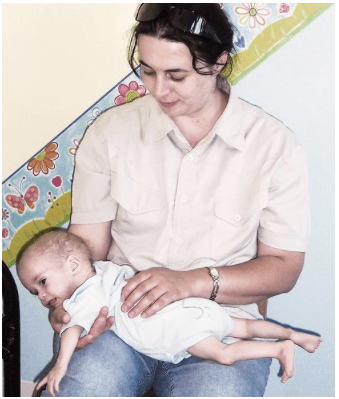
Photo- Corina Caba holding a malnourished baby.

She founded her orphanage in a tiny apartment in 1996, taking abandoned babies from the hospital and caring for them until she could find adoptive families. Gradually, she added to her staff, paying their salaries however she could. After Romania Reborn was founded to support the work, she built a bigger facility, hired more workers, and took in more babies. As the years passed, Romania’s laws and child welfare system evolved, but God always made a way for Corina to help abandoned children.

Today, Corina is the adoptive mother of four children and a mother figure to hundreds more, whose lives she has forever changed. She is also an emerging national leader in the field of orphan care, traveling to speak at conferences, helping advise the government on policy, and (reluctantly) speaking to national media. And she’s still fighting for individual children every day. “When the pain is too much, God taught me to trust in Him,” she says. “One day, He will restore all that seems lost, redeem all that seems hopeless, repair all that seems destroyed. Our God owns the last reply!”

http://www.romania-reborn.org/  

#love

Romania Without Orphans Alliance Report on Adoption

The degree of declaration of adoptability did not increase at all one year after the revised law on adoption was implemented, keeping it below 6% of the number of children in the system.

In March 2016, there were 57,581 children who had been abandoned by their families and entered the child protection system.

This report is the result of an analysis of the situation of abandoned children in the child protection system, carried out by the Romania Without Orphans Alliance.

The report was made public at the start of the A.R.F.O Summit, held in Bucharest, November 2017.

The report shows that the declaration of adoption for children where there is no possibility of being reunited with their biological families, is hampered by over exaggerated legislation and poor implementation of legislation.

The very small number, only 1.5% of children being adopted, highlights a worrying practise to keep children in institutions.

Another aspect highlighted by the report is that, whilst private organisations are not allowed to provide services unless they are licensed, 83% of public services do not have a license and do not meet mandatory minimum standards.

Raportul ARFO cu privire la situația copiilor din sistemul de protecție

Screen Shot 2020-05-06 at 13.30.08
An abandoned child. Photo credit; Thomas B. Szalay Photography (copyright).

raportează despre abandonat copii

A fost lansat raportul cu privire la situația copiilor din sistemul de protecție realizat de Alianța România Fără Orfani (ARFO)

Gradul de declarare a adoptabilității nu a crescut deloc după un an de la modificarea legii privind regimul juridic al adopției, acesta menținându-se sub 6% din numărul copiilor din sistem.

Raportul este disponibil aici:

Prezentul raport este rezultatul unei analize a situației copiilor din sistemul de protecție realizată de Alianța România Fără Orfani și a fost lansat în deschiderea Summit-ului ARFO 2017 organizat în București, la Crystal Palace Ballrooms.

Raportul arată că declararea adoptabilităţii pentru copiii fără posibilitate de reintegrare în familia biologică este îngreunată atât de prevederi legislative exagerate, cât şi de o aplicare deficitară a legislaţiei. Ca şi cum nu ar fi suficient, ponderea extrem de mică de copii adoptabili din rândul copiilor instituţionalizaţi (1,5%) sugerează o practică îngrijorătoare de a menţine copiii în sistem cu statut de neadoptabil.

Un alt aspect subliniat de raport este faptul că, în timp ce organismele private nu au voie să furnizeze servicii nelicenţiate, 83% dintre serviciile publice nu au licenţă şi nu îndeplinesc standardele minime obligatorii. Astfel, nivelul de calitate al asistenţei sociale în domeniul protecţiei copilului necesită mai multă atenţie impunându-se măsuri de încurajare a parteneriatelor între DGSAPC şi organismele private acreditate, acestea fiind de natură să ducă la îmbunătăţirea calităţii serviciilor în domeniu.

Pe de altă parte, raportul subliniază evoluţii pozitive prin deschiderea listei de „greu adoptabili”, prelungirea până la 14 ani a declarării adoptabilităţii, concomitent cu extinderea valabilităţii atestatului de părinte adoptator la 2 ani.

Raportul ARFO 2017 propune și soluții pentru îmbunătățirea situației identificate printre care reducerea gradului IV până la care se caută rudele în vederea declarării adoptabilității copiilor din sistem, interzicerea tranzitării copiilor din medii familiale în medii instituționalizate și emiterea standardelor minime pentru plasament familial.

Cursed Romania; Nearly Ten Thousand Children Abandoned in the Past year.

Cursed Romania! Nearly 10,000 children have been ABANDONED by their parents in the past year. The international bodies have identified the causes for a decision at the limit of cruelty

Nearly 10,000 children were abandoned by their parents in the last year, the number being lower compared to the previous year. The main cause of this phenomenon is poverty, according to statistics provided by the National Authority for the Protection of Child’s Rights and Adoption (ANPDCA).

According to the ANPDCA response at a MEDIAFAX request, data provided by the General Directorates for Social Assistance and Child Protection in the counties / sectors of Bucharest Municipality which have been centralized on a quarterly basis, show that between July 2016 and June 2017 a total of 9,614 children were separated from their families and entered into the special protection system (placement with relatives up to 4th grade, placement with other families / persons, placement in foster care and placement in residential services).

The same source shows that between July 2015 and June 2016, a total of 10,196 children entered the special protection system.

According to the study “Romania: Children within the Child Protection System” conducted by the World Bank, UNICEF and the ANPDCA, the three main causes – constantly identified – for the child being separated from the family and entering the child protection system, are poverty, abuse and neglect, and disability.”

According to data available at ANPDCA, most of the children in the special protection system come from poor or at-risk families living in precarious housing conditions.

Of the total number of children in the special protection system, about 36% had poverty as a structural risk factor as the main cause of child’s separation from the family of the child child.

The mentioned source states that about 32% of the children in the special protection system were abandoned by parents, and 10% of the children in the special protection system were taken over by the care system from their relatives.

According to the same source, “the counties with the highest number of children entering the special protection system were Iaşi, Vaslui, Timiş, Constanţa, Buzău”.

On the opposite side, says ANPDCA, are the counties of Ilfov, Gorj, and Sectors 3, 5 and 6 of Bucharest.

mediafax.ro  Sept.2017

Child Abuse in Romania; Behind the Iron Curtain

Home / SOCIETY & PEOPLE / SOCIAL / 771 children died during 1966-1990 in the Romanian foster homes, IICCMER says.
June 2; 2017.
foster homes

771 children died during 1966-1990 in the Romanian foster homes, IICCMER. in SOCIAL, SOCIETY & PEOPLE        The Institute for the Investigation of Communist Crimes and the Memory of Romanian Exile (IICCMER) has filed a denunciation to the Prosecutor’s Office for inhuman maltreatment over children admitted to foster homes during the communist regime in Romania. The case mainly refers to the sick or disabled children who used to be admitted in the hospital foster homes in Cighid, Pastraveni and Sighetu Marmatiei.

According to IICCMER for Gândul online daily, a total of 771 children died in there during 1966-1990, most of them due to medical causes that could have been prevented or treated. The IICCMER experts and legists say the cases revealed that children were submitted to inhuman treatments and aggressions. Overall, there were over 10,000 such victims in the communist foster homes.

These children used to be considered irrecoverable from the medical point of view, suffering severe handicaps, but many of them were orphans or abandoned by their parents and reached those centers without having serious diseases, IICCMER says.

One of these children abandoned in the foster home in Sighetu Marmatiei was Izidor Ruckel, now aged 37. He escaped the center after he has been adopted by an American family, right after 1990. He told his tragic story to the IICCMER experts.

They used to beat me and another boy with a broomstick so badly that I thought I was going to die. They used to sedate us, they kept us isolated,” Izidor recounted, as quoted by Gândul.

A Mother’s Journey to Reunite Adopted Romanian Daughter With Her Roots.

screen-shot-2016-11-15-at-08-46-14

A family reunited for the first time. From left: Cristina Graham; Jonquil Graham; Cristina's birth mother; Cristina's ...

This story is written by Nina Hindmarsh, Nelson Mail, Newspaper of the Year; Canon Media Awards. May 2017. 

A family reunited for the first time. From left: Cristina Graham; Jonquil Graham; Cristina’s birth mother; Cristina’s birth sisters Geanina-Ionela and Maria-Magdalena.

A horse pulls a cart down a dirt road. Geese flap their way through the dust.

In a small Romanian village on the border of Moldova, 26-year-old Cristina Graham walks apprehensively with her adopted mother, Jonquil Graham. They are there, thousands of kilometres from home, to meet the woman who gave Cristina away 25 years ago.

She is small and toothless, waiting with her hands clasped tightly behind her back in front of a barren, cobb house. Next to her on crutches is her husband and Cristina’s older half-sister, Maria-Magdalena. Until now, they have never met.

Cristina hugs her birth sister first, then her birth mother. Cristina doesn’t cry, but Cristina’s birth mother sobs as she holds her tightly, swaying her back and forth.

She tells Cristina she didn’t have the conditions to care for her, that her violent husband at the time, Cristina’s father, did not like children and that her sister had pushed her to give Cristina up.

“I felt sad for her,” Cristina says later. “It was hard seeing her like that.”

After that first meeting, Cristina explores the bare neighbourhood of Bivolari that would have been her’s had she stayed in Romania.

She didn’t expect to see her birth family living like this. She is beginning to grasp what poverty really means.

Her birth family’s health is suffering due to alcoholism. There is no running water in the house, no power, and they bathe from a bucket.

Six of the adopted Graham kids. From left to right: Tristan, Misha, Cristina, Joanna, Natasha, Masha

Six of the adopted Graham kids. From left to right: Tristan, Misha, Cristina, Joanna, Natasha, Masha

It is far from the idyllic childhood Cristina had being raised on a kiwifruit orchard in Golden Bay, among the loving, hustle-and-bustle of a sprawling melting-pot family.

Jonquil and her husband Bryan were one of the first New Zealand couples to attempt inter-country adoption, which included three girls from Romania. Cristina was one of them.

Together, the pair have adopted and raised nine children and fostered 20 more.

Unable to conceive children, Jonquil and Brian first became “accidental” adoptive parents when a relative could no longer care for their difficult 3-year-old daughter.

The Grahams took in the girl, and in the years following nearly 30 more children flooded into their care.

“We thought we could just love any child,” says Jonquil. “It doesn’t matter what colour or what creed. We had a big house, and we thought, ‘why not?’ Fill up the house.”

A FOUR-MONTH BATTLE

Jonquil remembers the putrid scent of boiled cabbage, urine and cleaning products as she entered a room lined with cots.

Jonquil and Bryan Graham with their three adopted Romanian daughters. From left; Jonquil with Cristina; Bryan with ...

Unknown

Jonquil and Bryan Graham with their three adopted Romanian daughters. From left; Jonquil with Cristina; Bryan with Natasha and Johanna.

“What struck me was the quietness,” she says. “Babies don’t cry in there, and they don’t because nobody is going to pick them up. Their needs were not met.”

In Romania’s orphanages, babies and children were so severely neglected they had learned not to cry, because no one would answer.

Jonquil recalls the trip they took with Cristina last year as a part of TV3’s Lost and Found which aired in March. It was there that Cristina was reunited with her roots. But 25 years ago the process for inter-country adoption was full of unknowns. Bringing baby Cristina home was an arduous journey.

“It was an absolute nightmare,” Jonquil says.

It was 1989, after the overthrow and execution of Romanian dictator Nicolae Ceausescu, that news began to filter out about a vast human tragedy happening to Romanian children behind closed doors.

Among the most disturbing were images of tens-of-thousands of abandoned children suffering abuse and neglect in Romania’s orphanages.

Confined to cribs, babies lay wallowing in their own filth, their cries going unheard and ignored.

There was outrage in the West. Western couples flooded in to adopt unwanted children and charities poured in to help.

Among those parents, were Bryan and Jonquil.

It was supposed to be just a three-week trip in order for Jonquil to bring their seventh child to their Golden Bay home in 1991.

“I had already been to Romania before to collect our other two Romanian twins, Johanna and Natasha,” says Jonquil. “And I was going back to adopt a boy we had left behind.”

Jonquil was haunted by the memory of two-year-old Bogdan whom she seen on that first trip but left in Romania. She was back to bring him home with her.

Jonquil left Bryan in Golden Bay in care of the kiwifruit orchard and the tribe of children.

But upon arrival, Jonquil was told the paperwork to adopt Bogdan had become invalid and she could not adopt him.

“But I always suspected foul-play,” Jonquil says. “The little boy was promised to me but I actually think they hid the papers.”

She spent the afternoon cuddling little Bogdan goodbye.

Determined not to return home empty-handed, it wasn’t long before Jonquil met Cristina-Laura.

The five-month-old baby girl had been abandoned in an orphanage by a teenage mother who did not have the resources to care for her.

But during the process of doing the paperwork, the local court threw out Cristina’s adoption application after badly translated papers stated Jonquil as being “infantile” instead of “infertile”.

Jonquil was then forced to endure three expensive and lengthy court hearings and a landmark decision in the Romanian Supreme Court involving some of the country’s most prominent lawyers in order to bring Cristina home.

She was robbed at knife point by a group of men during her stay and had her bag slashed open.

The prosecutor tried to convince the judge that the Grahams were only interested in adopting slave labour for their kiwifruit orchard and that the children would be raised for organ transplants or sold as slaves.

Jonquil appealed the case in the Supreme Court and won. She finally left Romania four months after she arrived with baby Cristina in her arms.

“I couldn’t believe I had been through that nightmare and I just wanted to get out safely and return back to my family.”

At the time of her leaving, riots were breaking out in Romania after the country’s central ruling committee decided to stop all further overseas adoptions.

Western couples who were waiting for their adoption papers to be approved panicked, creating dramatic and angry scenes. Just in the nick of time Jonquil and Cristina slipped out of Romania and into a new life.

A TRAGEDY

Among the adopted brothers and sisters that Cristina would join in Golden Bay were two Maori boys, one Rarotongan boy and a pair of Romanian twins.

A second pair of twins from Russia, a girl and boy, would join the family a few years later.

Their historic house sits at the base of Takaka Hill and is much quieter than it once was.

All but one of their nine children have left home, although grandchildren keep spilling through the doors now.

Jonquil says the most remarkable part of the trip back to Romania to meet Cristina’s family was finding out that their Romanian twins, Natasha and Johanna’s birth family, lived just streets away from Cristina’s birth family.

“I was absolutely gobsmacked,” she says.

Jonquil and Bryan had bought the tiny malnourished twins back from Romania when they were 10-months-old.

But in 2009, tragedy struck the devoted parents.

One of the twins, 19-year-old Natasha, was hit by a car in Nelson and died of her head injuries months later.

As the TV3 crew were filming on the street outside Cristina’s birth mother’s home, the twins’ own birth mother had been watching from across the road. She recognised Jonquil. She walked up to their interpreter to say: “When is that lady bringing the twins back to see me?”

The interpreter had to tell her that one of the mother’s daughters had died.

“It was so hard,” says Jonquil. “How do you tell a mother their child is dead?”

They returned a few days later with albums of the twins’ life to show the birth mother.

The last page of the album showed a photo of Natasha’s headstone.

“It was very emotional,” says Jonquil quietly. “I wish I would have had the language to tell her about the kilometre-long line of cars at her funeral.”

A NEW HOME

Jonquil says that although most of the couple’s adopted children have left home they still seem to keep adopting people.

“We have kind-of taken on the half-sister, Maria-Magdalena because she needs a family and we want to help her kids,” says Jonquil. “Now I will make a greater effort to learn Romanian.”

The Grahams say they are still in daily contact with her.

“She didn’t have the good start like Cristina. She’s a solo mother and doesn’t have much to do with her own mother.”

Jonquil says everyone is special and often they can’t help their circumstances, like those who are not loved properly.

“But that happens to millions of youngsters in the world, sadly. Everyone wants a rock.”

Cristina lives in Christchurch now, a solo-mother with a daughter of her own.

She has stayed in daily contact with her birth sisters by Facebook, but has struggled to keep the communication up with her birth mother.

Jonquil says a lifetime of questions for her have been answered for Cristina.

“It was a real eye-opener for Cristina. She is more settled now somehow, more at home in herself,” she says.

“I think she finally understands now why she was given the chance at a better life.”

Jonquil Graham is the author of the book, How Many Planes to Get Me? A story of adopting nine children and fostering 20 more.

 – Stuff

Romania’s Institutions For Abandoned Children Caused Life-Long Damage; Dr. Victor Groza

Romania’s Institutions Caused Lifelong Damage

Screen shot 2016-02-04 at 1.32.46 PMScreen shot 2016-02-04 at 1.42.42 PMScreen shot 2016-02-04 at 1.40.22 PMScreen shot 2016-02-04 at 1.43.35 PMScreen shot 2016-02-04 at 1.44.40 PMScreen shot 2016-02-04 at 1.46.34 PMScreen shot 2016-02-04 at 1.47.27 PMScreen shot 2016-02-04 at 1.47.04 PMScreen shot 2016-02-04 at 3.16.31 PMScreen shot 2016-02-04 at 1.49.37 PMScreen shot 2016-02-04 at 1.52.59 PMScreen shot 2016-02-04 at 1.51.23 PMScreen shot 2016-02-04 at 1.50.16 PMScreen shot 2016-02-04 at 1.53.31 PMScreen shot 2016-02-06 at 12.46.19 PM

Romania’s institutions have a history of neglect, physical, sexual and emotional abuse which still continues to this day and causes emotional, physical, and mental scars.

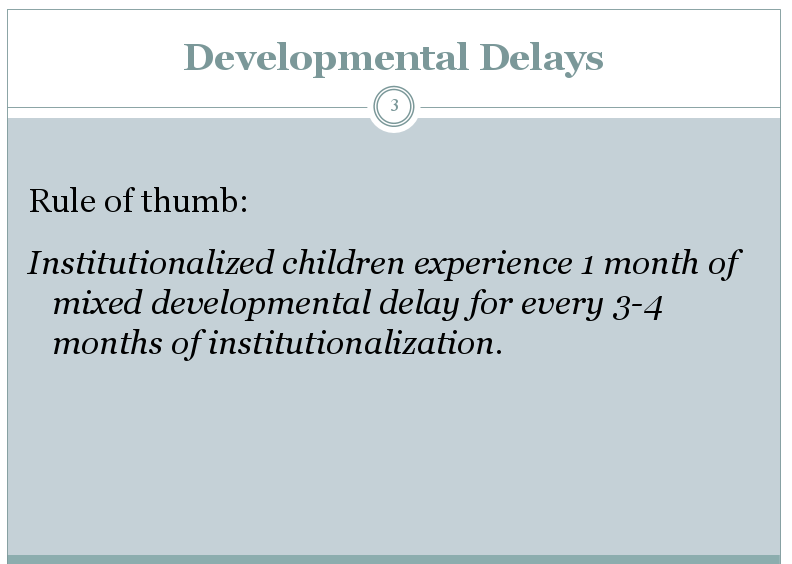
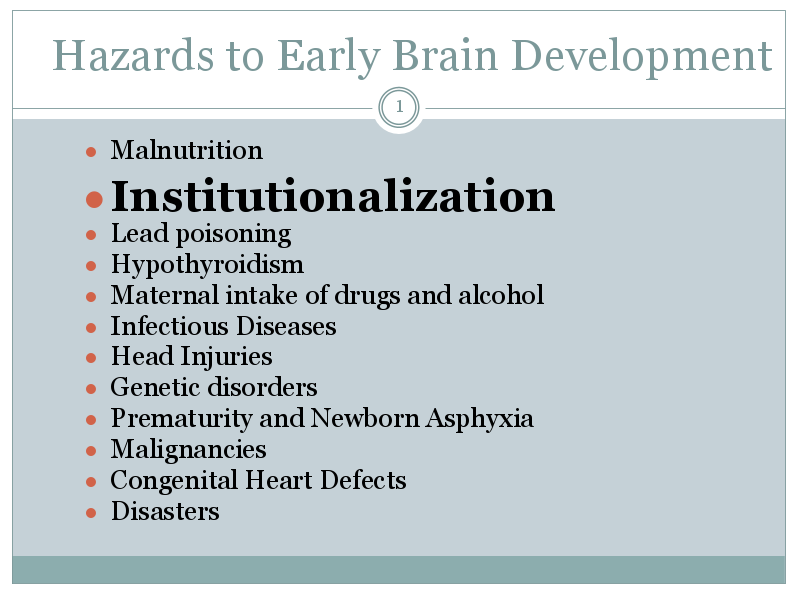
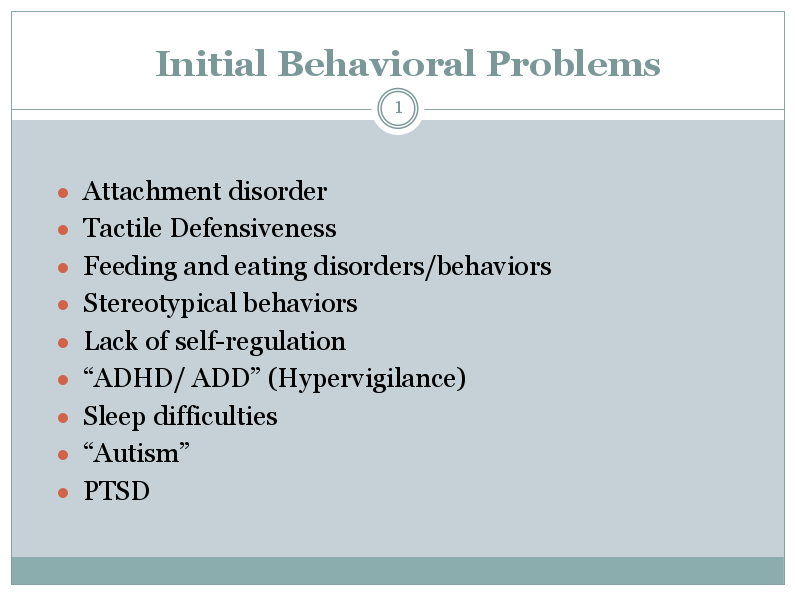
Institutionalized care, according to Dr. Victor Groza, the Grace F. Brody Professor of Parent-Child Studies at the Mandel School of Applied Social Sciences at Case Western Reserve University in Cleveland, Ohio, causes problems with developmental, physical, psychological, social and brain health. Dr. Groza stated, “The regimentation and ritualization of institutional life do not provide children with the quality of life, or the experiences they need to be healthy, happy, fully functioning adults.” They are also unable to form strong and lasting relationships with adults, leading to severe problems with socialization, primarily building trust and lasting relationships amongst adults and children alike.
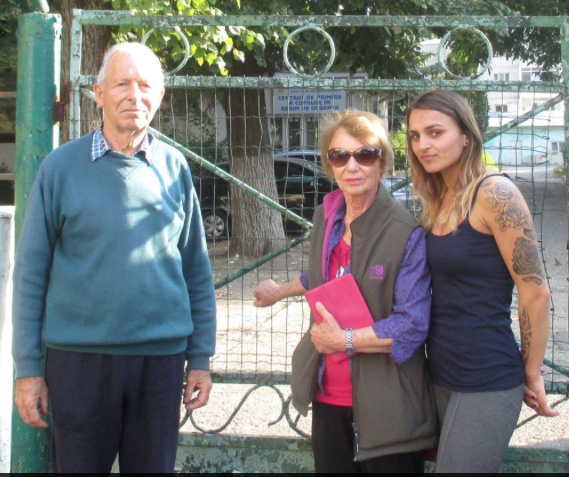
This article, kindly provided by Dr. Victor Groza, is an easy to follow guide to the risks inherent to children institutionalised at an early age. Dr. Groza has been developing social work education and promoting best practices in child welfare and domestic adoptions in Romania, since 1991.
Victor Groza; PhD,LISW-S Grace F. Brody Professor of Parent-Child Studies, Director; Child Welfare Fellows Program Jack, Joseph and Morton Mandel School of Applied Sciences, Case Western Reserve University, Cleveland, Ohio.http://msass.case.edu/faculty/vgroza/  – Faculty website for further reading.

https://www.facebook.com/adoptionpartners/?fref=ts  – Website about Professor Groza’s post-adoption practice.

57,581 Children Abandoned in Romania.


3,436 adoptable children recorded in Adoption Register at March-end BY

A total of 3,436 adoptable children were registered in the National Register for Adoption, at the end of March 2016, of whom 3,069 (89.32 percent) benefited from special protection measures in family type services and 367 (10.68 percent) benefited of special protection measures in residential type services, according to the statistics published by the Ministry of Labor, Family, Social Protection and Elderly People.

Also on 31 March 2016 there were 57,581 children in the adoption system with special protection, out of which 20,156 children (35 percent) benefited from special protection measures in residential type services (16,224 children in public residential type services, 3,932 children in private residential type services) and a number of 37,425 children (65 percent) benefited from special protection measures in family type services (18,815 children were in fostercare, 14,158 children were in the care of relatives up to grade IV included and 4,452 children were in the care of other families or persons.

The representatives of the Labor Ministry signals that, starting 1 January 2005, public services of social assistance created inside the city councils are the main in charge with the growth, which on 31 March 2016 offered services for 42.83 percent of the children that benefit from this sort of services, the accredited private bodies provide services for 19.65 percent and 37.52 percent are beneficiaries of prevention services provided by the Directorate General for Social Assistance and Child Protection.

On 31 March 2016 there were 1,135 public residential type services and 342 residential type services of accredited private bodies. These services include: classic or modular orphanages, apartments, family type houses, maternal centers, emergency reception centers, other services (the service for the development of independent life, day and night shelter).

From the total of 1,477 residential services, a number of 352 (public residential type services and and private residential services) were designed for children with disabilities. The number of children that benefited from a special protection measure in these services provided for children with disabilities was, at the end of March, 6,586 children, recording a decrease of 705 children compared to the same period of 2015.

On 31 March 2016, the Directorates for Social Assistance and Child Protection in every county/sector of Bucharest, the “Child Protection” departments counted 32,655 employees, 31 people more towards the end of the first quarter of last year, and 51 people more versus 31 December 2015.

In the total of 32,655 employees, 4,439 (13.59 percent) were hired in the DGASPC’s own structures, 12,016 (36.80 percent) were fostercare professionals, 12,398 (37.97 percent) were employed in residential type services and 3,802 (11.64 percent) were hired in daytime care services.


The photo is of the Codlea Children’s Centre, Brasov, which has recently been renamed the Magura Social Services Complex.