Alex Kuch; How International Adoption Changed My Life
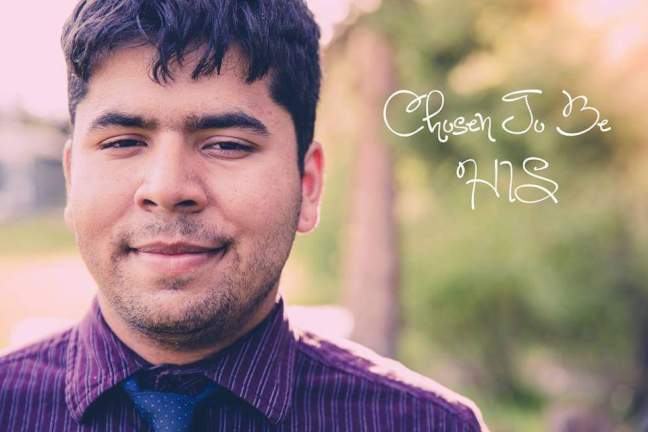

When Romanian orphan Alex Kuch was adopted at age two, his new family was told he would never finish high school or lead a normal life.
This week, Alex finished his final semester of a Bachelor of Arts degree in Politics and International Relations with a minor in Sociology at the University of Auckland.
Now 23-years-old, Alex is an established children’s rights advocate and is invited to speak around the world. Next month, he will co-present research into the experiences of adoptees at a major international conference in Canada.
“My parents weren’t going to let a prediction determine who I was going to become,” Alex says. “While never pushing me, they always encouraged me to give my best in everything I did. My family is really proud, especially as I’m the first person in my family to go to university. I’m really looking forward to using my degree in the real world.”
Alex will be one of the youngest presenters at the sixth International Conference on Adoption Research in Montreal and has received a grant from the University of Auckland’s Vice-Chancellor’s Student Support Fund to attend.
His research, completed with Dr Rhoda Scherman from AUT, analyses the stories of other adoptees shared on the New Zealand-based I’m Adopted website.
“The stories have helped us to pull together the common themes of what adopted children go through. It’s valuable knowledge for agencies and families, for example knowing when to intervene or what to expect, and to provide better support.”
Alex was adopted in 1997 from an orphanage in Cluj- Napoca, Romania by a German couple. He also has a younger brother adopted by the same family. The family moved to New Zealand in 2006.
At the time of his adoption, a German psychologist advised Alex’s family that the emotional damage from spending his formative years in an orphanage meant he would never lead a normal life, complete high school, or have the social skills to integrate into society.
“The conditions weren’t the greatest. My parents were told that I had started to rock backwards and forward due to a lack of emotional and physical stimulation and I could not look people directly in the eyes.”
Alex received specialist support such as speech and fine motor therapy, and against all odds, has now completed high school and university.
“It was challenging, however the University of Auckland has been very supportive. I had a writer for exams as I still have some fine motor challenges. Also many of my assignments were tailored to reflect my advocacy work.”
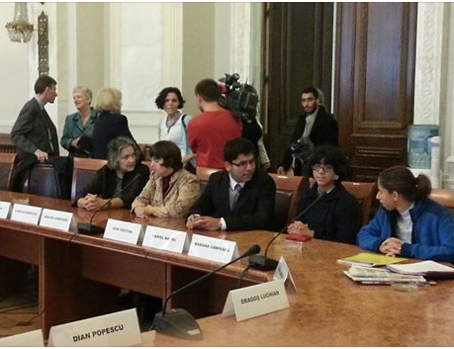
Alex is passionate about lobbying the Romanian Government to re-open international adoptions, which were closed in 2001.
In an unusual twist, Alex met his birth mother on live television during a lobbying trip to his birth country. While speaking on a talk show about his adoption experience, producers blindsided him by bringing his birth mother and half siblings onto the stage.
Alex is now concentrating on his long-term aspiration is to establish a children’s rights consultancy that collaborates with different sectors to have a positive impact on the wellbeing of children.
In October Alex will speak in Brussels at the third Asia-Europe Foundation Young Leaders Summit on children’s rights and international adoptions.
Danelle Clayton | Media Adviser
Communications Office
Email: d.clayton@auckland.ac.nz

Izidor Ruckel outside the locked orphanage in 1990.
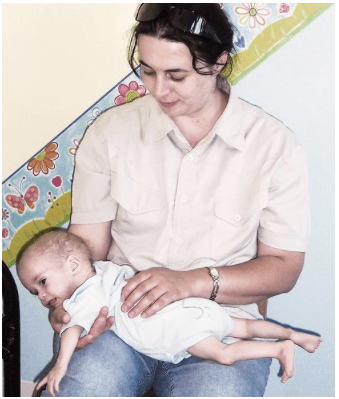
She grew up during the darkest days of Communism, the daughter of a Pentecostal preacher. She remembers being mocked for her faith every day at school. She remembers peeking under her bedroom door at night, watching the boots of the soldiers who had come to take her father away for interrogation. She remembers what it was like when Communism finally fell, and she learned that the government had hidden hundreds of thousands of children away in terrible orphanages. And that was when Corina Caba knew what God wanted her to do with her life.
Photo- Corina Caba holding a malnourished baby.
She founded her orphanage in a tiny apartment in 1996, taking abandoned babies from the hospital and caring for them until she could find adoptive families. Gradually, she added to her staff, paying their salaries however she could. After Romania Reborn was founded to support the work, she built a bigger facility, hired more workers, and took in more babies. As the years passed, Romania’s laws and child welfare system evolved, but God always made a way for Corina to help abandoned children.
Today, Corina is the adoptive mother of four children and a mother figure to hundreds more, whose lives she has forever changed. She is also an emerging national leader in the field of orphan care, traveling to speak at conferences, helping advise the government on policy, and (reluctantly) speaking to national media. And she’s still fighting for individual children every day. “When the pain is too much, God taught me to trust in Him,” she says. “One day, He will restore all that seems lost, redeem all that seems hopeless, repair all that seems destroyed. Our God owns the last reply!”
#love
 The Promise I Kept