Adoption

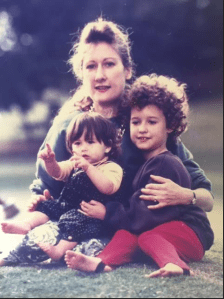
Thirty-five years ago, when I finally arrived back in Australia after adopting a baby girl from an orphanage in post Communist Romania, my youngest brother, Kent Rickerby, happened to be visiting Australia from New Zealand, and wrote this poem. For thirty-five years, this beautifully written, heartfelt poem was filed away, unread, until a few weeks ago, Kent found it and sent a copy and I was able to share it with Loredana on her thirty-five Birthday.

Title; For You I Gladly Sing.

From afar you came,

New life to gain,

Caught up with joy,

Caught up with love,

From hopeless to hopeful,

From poverty to paradise,

Loredana Iona,

Truly a gift from God,

With deep, (DARK) brown eyes,

And rose cheeked smile,

Playing with joy in the garden of life,

Bringing happiness to all you meet,

You bring a smile to my lips,

And you bring a dance to my eyes,

When I hold you, a babe in arms,

I truly marvel at God’s abundance in beauty,

I wonder what can be given that God has not already given,

But more love,

And more joy,

And I thank God to have met you.

For you I gladly sing.

Copyright, Kent Rickerby, 1991.

Expanding horizons in French: The Promise Kept is now available en Français!

French translation of The Promise I Kept

I’m thrilled to share that my book The Promise Kept is now available in French! This milestone represents more than just a language shift—it’s an opportunity to connect with new readers, spark fresh conversations, and offer this story to a broader audience.

From the original inspiration to the final punctuation, every word has been thoughtfully rendered to retain the heart of the message while resonating with francophone readers.

The Child of Your Heart

From New Zealand to Australia, from Australia to Romania, this is one incredible story of finding your children.

Words by Jessica Kramer, Editor @Ruth Magazine. Summer 2021 Edition.

In these days of social media, support and community groups for adoptive parents are going strong. As little as ten-fifteen years ago, unless you happened to have a friend already who was also going through the adoption process, it was much harder to find other parents going through the same circumstances.

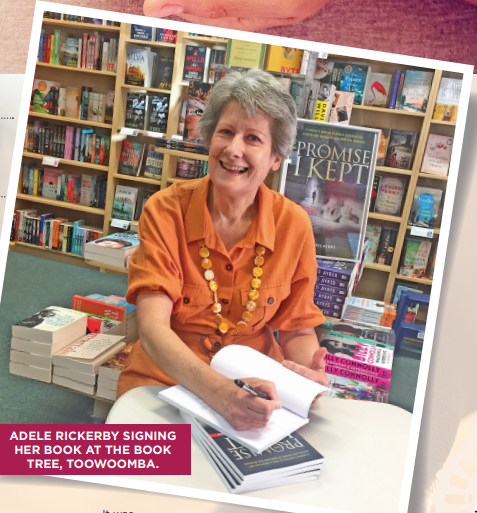
Now, however, is a completely different story-and it’s thanks to these strong on-line communities that the term ”the child of your heart”, has been coined. Adele Rickerby, author of ”The Promise I Kept”, explains the term with visible feeling; a biological child is born of your body, but an adopted child is born of your heart. It was a long journey that united Adele with the child of her heart in Romania thirty years ago, and was the catalyst for writing her memoir. ”I kept a diary when I was in Romania, and I wanted to keep the historical context, the family of origin context. I would wake up in the morning with whole sentences in my head and the pressure would get so great that I would have to write them down,” she explains.

While many people have a rosy picture of adoption, Adele and Loredana’s journey was far from easy. Adele had travelled halfway around the world to Romania, alone in an impoverished country recently torn apart by the revolution, confronted with the living conditions of families and of children abandoned in overflowing, understaffed orphanages. It was there she found a baby, Loredana, who had been in the orphanage since she was a week old, writing in The Promise I Kept, that the infants gaze seemed to say, ”Finally you have arrived. I have been expecting you, waiting for you”.

The voyage wasn’t over then, however, with the adoption needing to be legalized through the Romanian justice system before Adele flew back to New Zealand for the final adoption papers before arriving home in Australia. Because of the nature of International adoptions at the time, and the ill-timed news breaking about illegal adoptions from Romania shortly after Adele returned home with her daughter, she faced rumors about the nature of Loredana’s adoption and wanted to set the record straight. ”I felt I needed to write the book to respond to criticism that I had done an illegal adoption or had “bought” Loredana from her birth mother, Adele says. “Health issues forced me to retire early, but also gave me the opportunity to write my memoir.”

The Promise I Kept was originally published in 2013, but a recent reprint has seen it regain popularity once again. “I regretted not putting photos in the original version of the book, and I had seen iconic photojournalist Tom Szalay’s photos in journals and magazines. He collated photos of Romania for me and I added some personal ones.” It wasn’t an easy book to write, but Adele describes the process as therapeutic all the same. “It was hard to write the first time, hard to write the second time. But it was like when I was in Romania and had to get on the train alone- it didn’t feel like I was being brave at the time; I didn’t really think about it. There was this real sense of urgency so I just did it.” She says.

The Promise I Kept 2020 Revised Edition is available on Amazon as a paperback or kindle.

”Come Find Me” a Documentary by Noriflorentina Vito

This film depicts an authentic journey of the heart.

A very brave woman searches for answers as she seeks to uncover the truth about her adoption from Romania and to find her birth family.

Following the Romanian Revolution of 1989, Western media uncovered approximately one hundred thousand abandoned children living in institutions where death, disease and abuse were the norm.

Parents from countries such as England, Ireland, America, Canada, Germany, Australia and New Zealand, travelled to Romania to adopt these children in the hope of giving them a better life.

In the early 1990’s, there were estimates of approximately 1,000 children a week being adopted internationally.

Many of these children were not orphans but were abandoned by their parents due to poverty. 

The surge in International Adoptions led to widespread unethical practices, corruption and human trafficking.

In response, the Romanian government implemented stricter adoption laws and regulations and subsequently introduced a ban on International Adoptions in 2001.

This ban was lifted in 2005, but the process of International Adoption from Romania is long and complex and restricted to couples where one of the couple is Romanian or single women who are Romanian. 

Link to watch the story below:

https://www.pbs.org/video/come-find-me-bz3tpj/

The Promise I Kept; 2020 Revised Edition.

Promise I Kept 6×9 text_21.09.20(updated)

#love #family #amwriting

Newly updated for 2020, This revised and updated book documents Adele’s experiences with her daughter since the book was first published in 2013, and Adele’s ongoing involvement in highlighting the plight of Orphans in Romania. In 1991, unable to have a second child because of a medical problem and struggling to cope in a failing marriage, New Zealander, Adele Rickerby, decided to take her future in her hands by adopting a child from Romania. The misguided policies of the recently deposed Ceausescu government on family planning had led to the birth of an estimated 100,000 unwanted babies in that country. The Promise I Kept is Adele’s story of her nightmare journey halfway around the world to find and adopt a baby, to negotiate her way through the barriers created by red-tape and corrupt officialdom, and finally to carry her tiny new daughter safely home to a life where she could be properly loved and cared for.

Toni Tingle, Mereo Books, an imprint of Memoirs Publishing, Gloucestershire, U.K

Orphan advocacy and child welfare in Romania; Community facebook page; thepromisekept.co

A heartfelt autobiographical work, The Promise I Kept chronicles the journey to adopting a child from post cold-war Romania. With incredible honesty, Adele shares her lifetime with Endometriosis and the resulting surgeries, her amazing first daughter, Melannie and the desire for Melannie to have a sister- leading to the decision to adopt and a difficult trip to Romania to meet baby Natasha and bring her home. It is a book that is equal parts relatable and eye-opening, at times confronting, but ultimately showcases a woman’s incredible determination and love for her child.

Review; RUTH Magazine @RUTHmagazineAustralia  · Magazine

Copies are available to borrow or purchase from the following sites;

Dunedin Public Library, New Zealand, Heritage Room Collection.

Brisbane City Council Libraries

South Australian Libraries

Trove, National Library of Australia; https://trove.nla.gov.au/

Amazon, paperback, or kindle edition.

Please also see the link above to the pdf (text only) of the 2020 Revised Edition.

Even the Sparrow has Found a Home, by Thomas B. Szalay

https://www.magcloud.com/browse/magazine/1072551

This memoir, by photojournalist, Thomas B. Szalay, reflects on his journey into the lives of Izidor Ruckel and other abandoned Romanian children.

”Even the sparrow has found a home,

and the swallow a nest for herself,

where she may have her young-

a place near your altar, Lord Almighty, my King and my God.

Psalm 84;3

Romania Reborn; 8 Things You Should Know About Romania’s Child Welfare System

8 Things You Should Know about Romania’s Child Welfare System

ARFOreportcover.jpg

In November 2017, the Romania Without Orphans Alliance (ARFO) published its annual report on the condition of children living in Romania’s child welfare system. An English-language version came out in January.

The 24-page report—beautifully designed with photos, charts, data, and analysis—provides a devastating look at the state’s care for parentless children. We’re quite proud of this body of work as a reflection on ARFO, which we helped found, and which our supporters have helped fund.

Here are eight quick takeaways from the report;

1. Child abandonment is an ongoing and serious problem.

Although Romania’s population is declining, the number of children entering its child welfare system has stayed steady at around 10,000 per year. ARFO uses government data to show that it’s not just poor areas driving this problem. The capital counties of Bucharest-Ilfov made the top-10 list for both numbers of children in the system and for percentage of children in institutions. One sector of Bucharest had an alarming 59% of children in its system housed in institutions.

2. Most children who enter the system remain there until adulthood.

Of the 10,000 children abandoned each year, around 6,000 will stay in state care. “On paper, Romania’s Child Protection System offers a child temporary intervention until they are reintegrated into their biological family, or placed in an adoptive family,” ARFO president Liviu Mihaileanu writes. “In reality, this ‘temporary intervention’ usually lasts until they become an adult.”

3. Adoptions are all too rare.

A chart from the ARFO report shows the decline in adoption.

In 2016, only 788 children were adopted in Romania—a mere 1.3% of children in the system. This was the second-lowest number on record since at least 2000, but numbers are abysmal across the board. ARFO cites an anti-adoption bias from many state workers, who look askance at the practice of putting children in legal placement with families who want to adopt them.

A chart from the ARFO report shows the decline in adoption.

4. Even when families are available, the state keeps children in orphanages.

State workers often view children in orphanages as “solved cases,” with no further intervention or family placement needed. Sometimes they actively fight the removal of children from institutions. The ARFO report contains a firsthand account from one NGO worker who requested to take a child from an orphanage into placement. Not only was she denied, but her NGO’s work at the orphanage was threatened.

A 2016 law requires the government to declare abandoned children legally adoptable after 6-12 months, depending on circumstances. Yet this law is simply being ignored by case managers. Over a year later, only 1.5% of the children in Romania’s institutions have been declared adoptable.

Adoptability stats from the ARFO report. The number of adoptable children in institutions is especially troubling, given how clearly institutionalization is proven to harm children.

Adoptability stats from the ARFO report. The number of adoptable children in institutions is especially troubling, given how clearly institutionalization is proven to harm children.

“Case managers usually work for the same local government agency that is receiving funds to house the children,” ARFO notes. “Therefore, one may conclude that such a practice is intentional to secure staff and funding.” ARFO calls for legal sanctions against workers who fail to carry out the law, and who misinform and intimidate families seeking to remove children from institutions.

5. Children suffer from moves within the system.

ARFO decries the trauma of moving children in state care from place to place. They are especially concerned about the practice of placing children in foster families until age 3, then moving them to orphanages. Under Romanian law, no child under 3 may be placed in an institution, so the government often “rotates out” children when they get older. ARFO recommends a ban on moving a child from family care to an institution, except in exceptional circumstances.

ARFO5years.jpg

6. The state has no minimum standards governing family placement.

The government was supposed to publish standards in 2012 for family placement, the practice where children are placed with an unpaid foster family or birth relatives. Five years later, there are still no standards. Failing to evaluate and oversee children placed with birth relatives is dangerously negligent. ARFO recommends that the state create minimum standards as quickly as possible.

7. The state holds charities to strict standards its own agencies don’t meet.

The report notes: “While NGOs are not permitted to function in Romania without a license, only 17% of public social services are licensed. The rest function without meeting the minimum standards that all NGOs must meet to provide the same services.” ARFO decries the state’s monopoly over child welfare, where NGOs’ contracts can be canceled at will. The report calls for greater cooperation between the state and charities.

8. A number of positive developments have laid the groundwork for change.

ARFOadopterschart.jpg

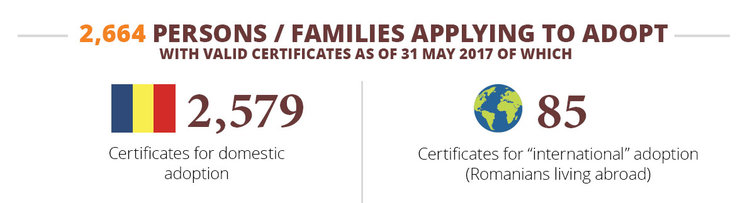
It’s not all bad news. First, the number of families certified to adopt is rising (currently over 2,600 families), indicating a growing interest in adoption. Second, the state has developed a list of “hard-to-place” children, allowing prospective families to view their profiles, which humanizes the process and encourages adoption of hard-to-place children. Third, the growing number of adoptions to Romanians abroad could provide the foundation for re-opening intercountry adoption. With real reforms, Romania could do much better for its children.

Support the work of ARFO by giving to our “Romania Without Orphans” fund.

Building My Adoption Support Team; Adele Rickerby

Within one year of adopting a baby girl from an orphanage in Romania, after the revolution, my husband was living elsewhere and I was a single mother of two beautiful girls. This was the inevitable result of a dysfunctional relationship. One in which I did not have the support of my husband when adopting.

I travelled alone to Romania and back home again via Germany and New Zealand, where I needed to finalise the adoption of my daughter as a New Zealand citizen. My ex-husband did not finally meet his adopted daughter until I returned home to Cairns, Australia, two months after I had left. There were many opportunities for him to be involved, but, apart from playing his part with the paperwork during the adoption approval process, which took three and a half years, that was all he did.

It is imperative that couples support each other and travel together throughout thier adoption journey. Meeting your adopted child for the first time in thier country of origin, is an essential part of the initial and ongoing bonding process for both parents.

Feeling isolated and with no support where I was living, I sold the family home, packed up what remained of our belongings after a garage sale, and moved to Brisbane with my two daughters. Natasha, my adopted daughter had just turned one year old and my biological daughter, Melannie, had just turned seven years old.

After settling in to a rented house, I actively went about building my adoption support team.                                                   International Adoptive Families Association of Queensland, was an essential part of my support team. I was already a member, having joined the organisation at the beginning of the adoption approval process. During that time, I spoke with other I.A.F.Q. members over the phone and looked forwards to receiving thier regular newsletters, but had never met a member in person. I started attending regular ”chat and plays” with Natasha. These were held in the homes of I.A.F.Q members or Parks and Gardens around Brisbane.

It wasn’t long before I was asked to take on a more active role. I was asked if I would co-ordinate the first seminar on Intercountry Adoption, to be held in Brisbane, and subsequently co-ordinated two more. Coordinating the seminars provided me with the opportunity to become more actively involved in the adoption community.

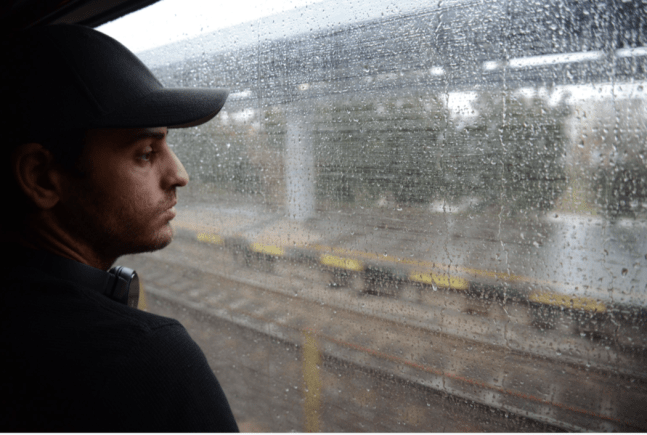
”Our Country is Poor But Our Hearts Are Rich”, said my fellow train passenger, an engineer on his way to an early morning meeting in Bucharest. The sun was rising on a day full of hope and promise, after a nightmare journey, alone, across Germany,  Austria, Hungary, and finally, Romania, on my way to adopt a baby girl. I had been thrown off the train at the border between Austria and Hungary by eight Hungarian soldiers with revolvers at their hips and one official. When, finally, I arrived at the Gara De Nord railway station, and after a lengthy wait, was met by Janet and Michaela, I was exhausted and relieved.

Janet and her husband were from Brisbane and were adopting a baby girl and a baby boy. We stayed together in Michaela’s house. When, eventually, I arrived in Brisbane, one of the first people whom I contacted was Janet. Another couple whom I had also met in Bucharest, Tina and Steve, were also from Brisbane and adopting a baby boy and thirteen months old girl. Tina and Steve arrived back in Brisbane after spending one year in thier original home country of England.

After the revolution, foreign journalists went into Romania and discovered approximately 100,000 abandoned babies and children living in horror institutions where they were neglected and abused. The New Zealand government established an adoption program with Romania and a group of New Zealand parents formed Intercountry Adoption New Zealand. New Zealand parents soon started arriving back from Romania with thier adopted children.

Narelle Walker, married to a New Zealand man whilst living in Brisbane and wanting to adopt, made enquiries and learnt that they could adopt from Romania as New Zealand citizens. Narelle and her husband were one of the first couples to travel to Romania. Narelle went to the media to tell her story. That’s how I learnt I could do the same.

Together, Narelle, Tina, Janet and myself formed the ”Eastern European Adoption Support Group”.                                                 Tina had a suitable home with a safe backyard with a fort-style cubby-house, a sandpit and a swing. There was a rumpus-room with lots of toys for rainy days. Soon, we were meeting every Thursday morning for playgroup. As a single mum with no family, this was another vital source of support for me. We still meet regularly, twenty-four years later.

In 2013, I wrote a short memoir; ” The Promise I Kept”, published by Memoirs Publishing in the U.K and available as a paperback from The Book Depository. It is also available to be downloaded as a kindle edition on Amazon.                      I followed this with my website; http://www.thepromisekept.co in which I publish articles about orphan advocacy and child welfare in Romania. I also have a community Facebook page of the same name.

This article, which I wrote, appeared in the July 2016 issue of ”Adoption Today” magazine.

Adele Rickerby

Alex Kuch; How International Adoption Changed My Life

Happy Birthday in the Family

Elgard Andreas, four years old.

Just a few years ago, Romania started a dirty and illegal business; they banned the adoption of the children abandoned by irresponsible people and put them in the hands of other irresponsible people!

At the age of four weeks after birth, I was abandoned at the No.4 Children’s House in Lugoj, Timis County. I was born on July 6, 1994, in the city of Jimbolia, Timis. My mother, Lili, wanted to get rid of me- she had postpartum. Mama, (Liliana’s mother), gave me to the children’s home.

At Lugoj, a Danish foundation annually organised a series of visits to families in Denmark, who wanted a child. I was one of the lucky ones in the project. I was admitted to a family in Copenhagen, the Elgard Jensen family, both employees of the Royal Danish House. The family had two sons, one of whom was a student in medicine. A very beautiful family who started my adoption. I was four years old. I knew that I was going to be theirs. I knew that I was going to be Danish. I wanted to get rid of the 120 kids in that ugly house, dirty and administered by bad people who beat me for no reason.

I was deluded. A family promised. I was sure that I would be adopted. I was in the courthouse or in the courtroom. I do not know exactly. I was asked if I wanted to be adopted by Eva and Flemming. I said my first ”da” and they took me out of the room. After a few minutes, I was told to return to Lugoj for a while. It was a short time because in December 1999 I was visited by the Herbold family from Germany who wanted to open a family home in Checea. They got me in their house. It was very nice. It was hot and I had food and I did not have to hurry when I ate. I could sleep without being touched by the older boys and I said for the first time, ”mother”. Unfortunately to a person not worth it.

At Checea, the Children’s Safety Foundation in Romania became my home. It became the place where I feel safe and appreciated for what I do.

I am twenty-four years of age. I graduated from the Social Assistance Faculty and I only have six months to complete the dissertation. I want to study more. I decided that after graduating the Mastership, I will enrolled in the PhD.

In 2017, helped by two friends, we set up an ong; YouHub Association, and in December 2017, I was elected President of the Institutionalised Youth Council, the national representation of children abandoned in Romania.

My mission is to promote and protect the rights of the child. Adoption is a fundamental right through the right to family. The Romanian government, encouraged by a Baroness, blocked International adoption on the grounds that it had become organ-trafficking. Checks, inquiries, and other inquiries and …nothing!!

I don’t understand Tiriac’s involvement in this story! But one thing is certain. Romania boasts about 57,000 abandoned children. 19,000 in children’s homes.

Are we a statistic or are we people who could change our story if we were supported towards an independent, dignified and better life.

In January, Adoption Law should be discussed in the Chamber of Deputies, was voted unanimously in the Senate. I hope that the article on the reopening of International Adoption from Romania is voted for and so gives the chance of a family to all abandoned children.

https://andreaselgardjensen.ro/2019/01/02/la-multi-ani-in-familie/