
Project Hope for the Children Inc.

Curious, I emailed Ramona Petrella Cummings, Founder and Executive Director of P.H.F.T.C.Inc. and asked her to tell me some things about her charity. This is her reply;

I moved to România în 2003 for a six month tour, working under a non profit organization in their private orphanage. During my time there, I was introduced to the local pediatric hospital where social babies who were either orphaned or abandoned were warehoused. I was told I could do anything I wanted to with the babies , but the hospital had nothing to aid with their care for me to use. No soap, no disposable diapers, wipes, creams, formula etc. I wrote home and asked my supporters for funds to buy these basic baby essentials and $750 came in. I started buying supplies and with the help of two friends we bathed, lotioned, changed, fed, and loved on these little ones. Many screamed at human touch or at bath time or just being lifted out of their cribs. It wasn’t initially very peaceful or happy, but after several weeks we started to see a difference. After returning home, I decided to keep trying to raise money for this cause and that found me returning every 6 months to work with the babies and buy supplies for the hospital. Soon, other people and foundations started helping in the hospital and I partnered with them by giving them supplies to work with. I turned my ministry into a non for profit about 9 years ago or so. 

Social babies are what the children are sometimes referred to when they are in and out of government care, abandoned, and require social services’ help.

Initially, the abandonment was caused by extreme poverty, lack of jobs for women, Italian men fathering the children and abandoning responsibilities after finding out their girlfriend was pregnant. Mainly, it was due to it being ingrained in the Romanians heads that the communist government took care of things like this. Ceaucescu the dictator, forced people to have children and if they couldn’t care for them they were to put them in institutions for the government to “help” raise. It just became a way of life. The Roma population and their culture also adds to the abandonment issue, with young girls being married off at early ages and having children into poverty and ignorance of mothering. That is mostly the issue now as România is becoming more prosperous and the new generation isn’t ingrained in communism. 

Ramona Petrella Cummings, Founder and Executive Director, P.H.F.T.C.Inc.

P.H.F.T.C.Inc. collaborates with and assists several Romanian Foundations working with the Roma and abandoned children, one of which is; Forget Me Not Ministries Co-op. We heard from Rachel Ross, Executive Director, Forget Me Not Ministries Co-op. This is what Rachel said;

From what I remember from conversations with government social workers in the hospital when we would have 100 abandoned babies or so at a time…they would not classify them as abandoned or social babies as they were not legally “abandoned” as in their parents had not signed away their rights. So, that was one way that they could deny having an abandoned baby crisis or issue…technically…they were not abandoned…even though some had been there for quite some time. But that was back in the day.

The majority of the abandoned children are Roma (gypsy).  

Yes, poverty is a main factor in the cause of the children being abandoned. Over 90% of the Roma face unemployment, so providing for their families can be quite difficult. 

Also, I believe it is a mentality that is left over from communist times as well, when families were encouraged to leave their children with the government and were taxed on having fewer than 5 children. Many Roma families that we have worked with do not consider that they have “abandoned” their child when they leave them in the hospital and are almost offended when I suggest that. They often think of it as receiving help for a few years with their child until they are in a better financial position. 

The only real government assistance I know of is the children’s allowance which parents receive monthly. 718 lei for children up to two years old and 291 lei for children between two and eighteen years old. 718 lei converts to $156.00 U.S and 291 lei converts to $63.00 U.S.

I do not know of any extra assistance for single mothers, only extra allowance if your child has special needs. 

I can say that I cannot think of too many moms at all that are single in the Roma community at least. In their community, it would be incredibly unsafe to stay single and oftentimes they will subject themselves to any kind of relationship, healthy/safe or not, in order to have someone to provide for them and protect them. 

Rachel Ross Executive Director Forget Me Not MinistriesRomaniafmnministries.org

Photo credit; With permission to use from Ramona Cummings facebook page. Have a look at their facebook page, which will also direct you to their website.

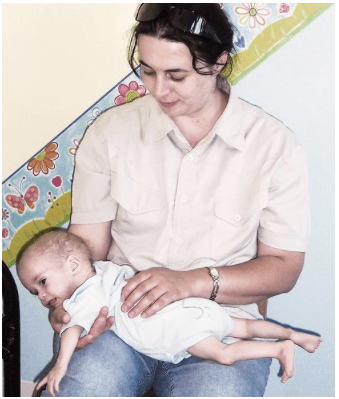
How Can You Walk Away?

By Adele Rickerby

The tragedy of Romanian mother’s abandoning their babies.

According to data published on the website of the National Authority for the Protection of Children’s Rights and Adoption, (A.N.D.P.C.A.) two hundred and seventy six babies were abandoned by their mother’s in Maternity hospitals and other health facilities in the first nine months of 2022. Forty-eight less than the similar period in 2021. Of these, two hundred and twenty were left in Maternity wards, fifty-four in Pediatric wards, and two were left in another hospital ward. One hundred and three were returned to their families, two were placed with the extended family, fifteen with families/individuals and one hundred and thirty-four were placed with foster parents.

According to U.N.I.C.E.F Romania, (the United Nations Children’s Fund), one in ten pregnancies in Romania are teenage mothers and that poverty is one of a number of risk factors.
The following reports, Authored by; Andrea Neculau, Diana Negut, Mihai Vacaru and Cristina Vladu states that ”Teenage pregnancy in Romania is a complex social phenomenon”.

  1. UNICEF Romania County Reports on teenage mothers
    1. Policy framework to prevent teenage pregnancy and its consequences
    2. POLICY BRIEF: Prevention of teenage pregnancy and its consequences

Save the Children Romania reports that forty-five percent of the births registered among girls under the age of fifteen in the European Union, of which there are twenty-seven countries, are in Romania. This number is the highest in the European Union. Romania also ranks highest in the E.U. in terms of infant mortality, the main cause being premature births.

In collaboration with the O.M.V. Petrom Foundation, Save the Children Romania have launched the ”Baby Box” program, which aims to reduce infant mortality and support families immediately after birth.

https://www.salvaticopiii.ro/ce-facem/Sanatate/Cutia-bebelusului

According to statistics from the A.N.D.P.C.A. Website, the number of babies abandoned from January to December 2020, was four hundred and thirty-one. The numbers for 2023 are significantly lower.

You can find official statistics at the following link https://copii.gov.ro/1/date-statistice-copii-si-adoptii/ at category „Copii Părăsiti în Unitățile Sanitare”.

Romania Reborn; Hands of Hope

She  grew up during the darkest days of Communism, the daughter of a Pentecostal preacher. She remembers being mocked for her faith every day at school. She remembers peeking under her bedroom door at night, watching the boots of the soldiers who had come to take her father away for interrogation. She remembers what it was like when Communism finally fell, and she learned that the government had hidden hundreds of thousands of children away in terrible orphanages. And that was when Corina Caba knew what God wanted her to do with her life.

Photo- Corina Caba holding a malnourished baby.

She founded her orphanage in a tiny apartment in 1996, taking abandoned babies from the hospital and caring for them until she could find adoptive families. Gradually, she added to her staff, paying their salaries however she could. After Romania Reborn was founded to support the work, she built a bigger facility, hired more workers, and took in more babies. As the years passed, Romania’s laws and child welfare system evolved, but God always made a way for Corina to help abandoned children.

Today, Corina is the adoptive mother of four children and a mother figure to hundreds more, whose lives she has forever changed. She is also an emerging national leader in the field of orphan care, traveling to speak at conferences, helping advise the government on policy, and (reluctantly) speaking to national media. And she’s still fighting for individual children every day. “When the pain is too much, God taught me to trust in Him,” she says. “One day, He will restore all that seems lost, redeem all that seems hopeless, repair all that seems destroyed. Our God owns the last reply!”

http://www.romania-reborn.org/  

#love

A Mother’s Journey to Reunite Adopted Romanian Daughter With Her Roots.

screen-shot-2016-11-15-at-08-46-14

A family reunited for the first time. From left: Cristina Graham; Jonquil Graham; Cristina's birth mother; Cristina's ...

This story is written by Nina Hindmarsh, Nelson Mail, Newspaper of the Year; Canon Media Awards. May 2017. 

A family reunited for the first time. From left: Cristina Graham; Jonquil Graham; Cristina’s birth mother; Cristina’s birth sisters Geanina-Ionela and Maria-Magdalena.

A horse pulls a cart down a dirt road. Geese flap their way through the dust.

In a small Romanian village on the border of Moldova, 26-year-old Cristina Graham walks apprehensively with her adopted mother, Jonquil Graham. They are there, thousands of kilometres from home, to meet the woman who gave Cristina away 25 years ago.

She is small and toothless, waiting with her hands clasped tightly behind her back in front of a barren, cobb house. Next to her on crutches is her husband and Cristina’s older half-sister, Maria-Magdalena. Until now, they have never met.

Cristina hugs her birth sister first, then her birth mother. Cristina doesn’t cry, but Cristina’s birth mother sobs as she holds her tightly, swaying her back and forth.

She tells Cristina she didn’t have the conditions to care for her, that her violent husband at the time, Cristina’s father, did not like children and that her sister had pushed her to give Cristina up.

“I felt sad for her,” Cristina says later. “It was hard seeing her like that.”

After that first meeting, Cristina explores the bare neighbourhood of Bivolari that would have been her’s had she stayed in Romania.

She didn’t expect to see her birth family living like this. She is beginning to grasp what poverty really means.

Her birth family’s health is suffering due to alcoholism. There is no running water in the house, no power, and they bathe from a bucket.

Six of the adopted Graham kids. From left to right: Tristan, Misha, Cristina, Joanna, Natasha, Masha

Six of the adopted Graham kids. From left to right: Tristan, Misha, Cristina, Joanna, Natasha, Masha

It is far from the idyllic childhood Cristina had being raised on a kiwifruit orchard in Golden Bay, among the loving, hustle-and-bustle of a sprawling melting-pot family.

Jonquil and her husband Bryan were one of the first New Zealand couples to attempt inter-country adoption, which included three girls from Romania. Cristina was one of them.

Together, the pair have adopted and raised nine children and fostered 20 more.

Unable to conceive children, Jonquil and Brian first became “accidental” adoptive parents when a relative could no longer care for their difficult 3-year-old daughter.

The Grahams took in the girl, and in the years following nearly 30 more children flooded into their care.

“We thought we could just love any child,” says Jonquil. “It doesn’t matter what colour or what creed. We had a big house, and we thought, ‘why not?’ Fill up the house.”

A FOUR-MONTH BATTLE

Jonquil remembers the putrid scent of boiled cabbage, urine and cleaning products as she entered a room lined with cots.

Jonquil and Bryan Graham with their three adopted Romanian daughters. From left; Jonquil with Cristina; Bryan with ...

Unknown

Jonquil and Bryan Graham with their three adopted Romanian daughters. From left; Jonquil with Cristina; Bryan with Natasha and Johanna.

“What struck me was the quietness,” she says. “Babies don’t cry in there, and they don’t because nobody is going to pick them up. Their needs were not met.”

In Romania’s orphanages, babies and children were so severely neglected they had learned not to cry, because no one would answer.

Jonquil recalls the trip they took with Cristina last year as a part of TV3’s Lost and Found which aired in March. It was there that Cristina was reunited with her roots. But 25 years ago the process for inter-country adoption was full of unknowns. Bringing baby Cristina home was an arduous journey.

“It was an absolute nightmare,” Jonquil says.

It was 1989, after the overthrow and execution of Romanian dictator Nicolae Ceausescu, that news began to filter out about a vast human tragedy happening to Romanian children behind closed doors.

Among the most disturbing were images of tens-of-thousands of abandoned children suffering abuse and neglect in Romania’s orphanages.

Confined to cribs, babies lay wallowing in their own filth, their cries going unheard and ignored.

There was outrage in the West. Western couples flooded in to adopt unwanted children and charities poured in to help.

Among those parents, were Bryan and Jonquil.

It was supposed to be just a three-week trip in order for Jonquil to bring their seventh child to their Golden Bay home in 1991.

“I had already been to Romania before to collect our other two Romanian twins, Johanna and Natasha,” says Jonquil. “And I was going back to adopt a boy we had left behind.”

Jonquil was haunted by the memory of two-year-old Bogdan whom she seen on that first trip but left in Romania. She was back to bring him home with her.

Jonquil left Bryan in Golden Bay in care of the kiwifruit orchard and the tribe of children.

But upon arrival, Jonquil was told the paperwork to adopt Bogdan had become invalid and she could not adopt him.

“But I always suspected foul-play,” Jonquil says. “The little boy was promised to me but I actually think they hid the papers.”

She spent the afternoon cuddling little Bogdan goodbye.

Determined not to return home empty-handed, it wasn’t long before Jonquil met Cristina-Laura.

The five-month-old baby girl had been abandoned in an orphanage by a teenage mother who did not have the resources to care for her.

But during the process of doing the paperwork, the local court threw out Cristina’s adoption application after badly translated papers stated Jonquil as being “infantile” instead of “infertile”.

Jonquil was then forced to endure three expensive and lengthy court hearings and a landmark decision in the Romanian Supreme Court involving some of the country’s most prominent lawyers in order to bring Cristina home.

She was robbed at knife point by a group of men during her stay and had her bag slashed open.

The prosecutor tried to convince the judge that the Grahams were only interested in adopting slave labour for their kiwifruit orchard and that the children would be raised for organ transplants or sold as slaves.

Jonquil appealed the case in the Supreme Court and won. She finally left Romania four months after she arrived with baby Cristina in her arms.

“I couldn’t believe I had been through that nightmare and I just wanted to get out safely and return back to my family.”

At the time of her leaving, riots were breaking out in Romania after the country’s central ruling committee decided to stop all further overseas adoptions.

Western couples who were waiting for their adoption papers to be approved panicked, creating dramatic and angry scenes. Just in the nick of time Jonquil and Cristina slipped out of Romania and into a new life.

A TRAGEDY

Among the adopted brothers and sisters that Cristina would join in Golden Bay were two Maori boys, one Rarotongan boy and a pair of Romanian twins.

A second pair of twins from Russia, a girl and boy, would join the family a few years later.

Their historic house sits at the base of Takaka Hill and is much quieter than it once was.

All but one of their nine children have left home, although grandchildren keep spilling through the doors now.

Jonquil says the most remarkable part of the trip back to Romania to meet Cristina’s family was finding out that their Romanian twins, Natasha and Johanna’s birth family, lived just streets away from Cristina’s birth family.

“I was absolutely gobsmacked,” she says.

Jonquil and Bryan had bought the tiny malnourished twins back from Romania when they were 10-months-old.

But in 2009, tragedy struck the devoted parents.

One of the twins, 19-year-old Natasha, was hit by a car in Nelson and died of her head injuries months later.

As the TV3 crew were filming on the street outside Cristina’s birth mother’s home, the twins’ own birth mother had been watching from across the road. She recognised Jonquil. She walked up to their interpreter to say: “When is that lady bringing the twins back to see me?”

The interpreter had to tell her that one of the mother’s daughters had died.

“It was so hard,” says Jonquil. “How do you tell a mother their child is dead?”

They returned a few days later with albums of the twins’ life to show the birth mother.

The last page of the album showed a photo of Natasha’s headstone.

“It was very emotional,” says Jonquil quietly. “I wish I would have had the language to tell her about the kilometre-long line of cars at her funeral.”

A NEW HOME

Jonquil says that although most of the couple’s adopted children have left home they still seem to keep adopting people.

“We have kind-of taken on the half-sister, Maria-Magdalena because she needs a family and we want to help her kids,” says Jonquil. “Now I will make a greater effort to learn Romanian.”

The Grahams say they are still in daily contact with her.

“She didn’t have the good start like Cristina. She’s a solo mother and doesn’t have much to do with her own mother.”

Jonquil says everyone is special and often they can’t help their circumstances, like those who are not loved properly.

“But that happens to millions of youngsters in the world, sadly. Everyone wants a rock.”

Cristina lives in Christchurch now, a solo-mother with a daughter of her own.

She has stayed in daily contact with her birth sisters by Facebook, but has struggled to keep the communication up with her birth mother.

Jonquil says a lifetime of questions for her have been answered for Cristina.

“It was a real eye-opener for Cristina. She is more settled now somehow, more at home in herself,” she says.

“I think she finally understands now why she was given the chance at a better life.”

Jonquil Graham is the author of the book, How Many Planes to Get Me? A story of adopting nine children and fostering 20 more.

 – Stuff