Half a Million Abandoned Kids; Moving Forward From South East Europe’s History of Shame

Screen Shot 2018-02-24 at 17.58.05

One baby is abandoned every six hours in Romania.

Report on Child Protection by Ioana Calinescu. Photos by Petrut Calinescu.

Looking at results in child protection can show an “X-ray of regional mentalities”, says Andy Guth. Child Pact.

“There is so much more to do for the children of Romania, but you need to know where we started from,”  Daniela Buzducea, World Vision.

“When the Police find a new child on the street, they call me first,”  Zini Kore, All Together Against Child Trafficking.

“These youngsters are so hungry they would eat the corner of the table,” Mariana Ianachevici, Child Protection NGOs Federation, Moldova

Hoping to increase the age that children in Romania are institutionalised, from three to six years old, Daniela Gheorghe, FONPC

Half a million children were left abandoned in eastern Europe following the collapse of Communism that began in the 1980s.

After more than 25 years of democracy, many of these countries’ record on child protection is now mixed. 

In 1997, while global concern focused on abandoned children in Romania, 1.66 per cent of the country’s kids were separated from their families.

By 2013, this had dropped to only 1.52 per cent.

This means 60,000 children have been recently cut off from their parents, according to the new Child Protection Index, a cross-border instrument launched this week in Brussels.

Most southeast European nations – including Romania – are fast to reform their laws, but changes are slow to improve the life of every child.

Belgrade, 2016. A tiny conference room, packed with civil society activists who have fought for children’s rights from the wider Black Sea and Eastern Europe since the fall of Communism.

Armenians, Georgians, Bulgarians, Serbians, Moldavians, Romanians, Albanians, Bosnians and Kosovars look at the findings of a comparative study as though they were the pass, dribble, tackle and assist of a football match.

A whisper rises up from the Bulgarian delegates.

“Romanian really undid us on this one,” comes a voice.

Despite the collegiate atmosphere among the members who all put the needs of children way above national interest, there is a still time to entertain rivalry between the EU’s two poorest countries.

The study has been developed in nine nations and shows how the lives of these “invisible” children changed over the last twenty-five years.

Romania was the country with the largest problem – with its abandoned kids running into the 100,000s.

The images of abandoned children after the fall of its Communist regime remain scars on the European collective conscience.

To stop the population decline in Romania in the 1950s, due to more working women and a fall in living standards, the Communist Party aimed to boost the numbers of Romanians from 23 million to 30 million.

In 1966, in a move to raise the birth rate, Romanian dictator Nicolae Ceausescu de facto declared abortion and contraception illegal.

This resulted in parents abandoning children in hospitals after birth. The state then placed the kids in overcrowded institutions.

With the break-up of communism in 1989, the doors opened to a humanitarian crisis.

Today ChildPact is the only regional alliance that includes more than 600 child rights organizations. For the ten national members, ChildPact is the friends they grew up with; with whom they shared the same playground and the same stories. They know the group dynamics, the pacts and rivalries, the sensitivities and small victories.

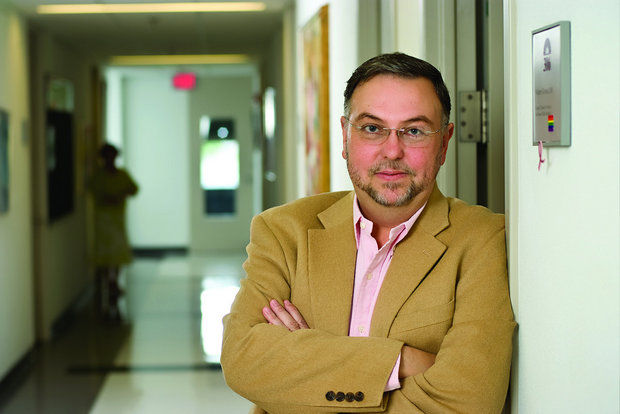
Romanian doctor Andy Guth pours over comparative charts showing which child protection reform models  worked in spite of the east European national systems, and which tend to be corrupt and underfinanced, with low levels of economic development, bad laws and zero methodology of implementation.

Child outside block in Ferentari, Bucharest (copyright: Petrut Calinescu)
“At the back of the institution: an image that still haunts me”

Spring, 1990, in Romania. Guth was a recent graduate from medical school and fledgling director of an orphanage in Onești. Here he was signing two of the first transfers to a hostel for ‘irrecoverable’ children, the official term for mentally or physically disabled minors.

These children were clinically healthy when they were admitted.

“Two weeks later, we received the first death certificate,” he says. “I immediately went to the hostel. The first thing I saw when I got out of the car was the graveyard behind the institution. They had their own graveyard!”

For Guth, this was ground zero – the initiation point for the child protection renaissance that would follow seven years later.

“It’s an image that will haunt me for the rest of my life,” says Guth.

Guth was one of the doctors on the frontline of humanitarian convoys in the nineties, facilitating the programs drawn up in offices abroad. They were known as ‘The White Guard’.

Many became civil society activists, who still play an active role in the reform of child protection.

Why did doctors take on such a role?

During Communism, medically-trained personnel were tasked with raising deserted children in unheated buildings that served as town hospitals. This abandonment was seen as a public health issue.

Twenty-five years later, Guth is presenting the results of the Child Protection Index, an international instrument whose development he dedicated four years to, coordinating the collaboration of 71 child protection experts from nine countries. He has worked on the project together with Jocelyn Penner Hall, World Vision’s Policy Director.

This has some disturbing information.

“One baby abandoned every six hours”

In Romania, the number of children separated from their families in 1997 was in the range of 100,000 for six million kids.

By the end of 2013, the number hovered around 60,000 for a total population of four million.

Taken together this amounts to a statistically insignificant change, from 1.66 per cent in 1997 to 1.52 per cent in 2013.

One reason for this is a gap between reforms on paper, and those on the ground.

For instance, between 1997 and 2007, Romania was pressured by the EU integration process to accelerate reforms. Now – according to the Index – Romania scores highest when it comes to public policies and legal framework, but still hosts the greatest number of institutionalised children in the region.

Armenia and Moldavia follow closely behind. At the other end of the spectrum, the Index results show that of all countries surveyed, Kosovo has parents who are least likely to abandon their children.

Meanwhile, in Romania today, a baby is abandoned in a maternity hospital every six hours.

What does the tiny decrease in infant abandonment say about child protection efforts over the last twenty-five years?

“This says that one cannot change the mentality of the public by responding to EU pressure alone,” says Penner-Hall.

“It’s been said that the year Romania joined the European Union marked the burial of [child protection] reform. With no external pressure, nothing remarkable happened. However, I believe that after 2007 smaller, more meaningful things occurred. The worst day ever was the first day of democracy in Romania; it was that day when the public conscience started to blossom.”

Guth also believes that the Index can also be seen as an X-ray of regional mentalities.

“For instance, the results prove that in Armenia 97 per cent of disabled children are taken care of by the state, while only three per cent grow in real families,” adds Guth.

“The Index also shows that in Georgia the exploitation of children through labour is not considered an issue. They think it is normal for some children not to go to school.”

Romania: number of kids in rural areas going hungry “doubled”

Back in the conference hall, Guth cautions that the results he is about to present are not part of a competition.

But he knows that the moment he opens the diagrams comparing the nine countries, the Romanians will look at where the Bulgarians stand, the Albanians will check Serbia’s scores and the Armenians will want to know if they have outrun the Georgians.

According to overall Index country scores, Romania is placed highest, followed by Bulgaria and Serbia. At a continental level, Romania has some of the most efficient child protection legislation. “The law is built upon the structure of the UN Convention on the Rights of the Child,” says Guth. “In theory, Romania rocks.”

But in practice, the Eurostat data shows is that, as of 2013, the child poverty rate in Romania exceeded 48.5 per cent.

A 2014 World Vision report stated that eight from 100 children in Romania face extreme poverty, living on less than 3.5 Euro per day. The same study testifies that one out of eight children in rural areas go to bed hungry.

This percentage doubled between 2012 and 2014.

“There is so much more to do for the children of Romania,” says Daniela Buzducea, Executive Director of World Vision Romania. “Then again, to see how far you’ve come, you need to know where we started from.”

Daniela is part of the first “free” generation of social workers in Romania. Only in 1994 did Post-Communist Romania have its first graduate promotion in this field. Before this moment, this occupation did not exist.

In the 90s found Daniela in the homes of some of Romania’s most vulnerable children. She was trying, on her own, to prevent the separation of children from their families.

“To me, the Romania of those years is HIV positive children who got infected in hospitals,” she recounts.

In the late 1980s, thousands of children in Romanian institutions contracted HIV due to blood transfusions from syringes infected with the virus.

“The real moment the reform started is encompassed in a scene when I was visiting a young mum with an infected baby,” says Daniela. “She had no form of support whatsoever. She was going through hell. I also had a small baby at home, and apart from visiting this woman just to reassure her that she was not completely alone, there was not much else I could do.

“One day, she was diagnosed with cancer and lost her hair because of the treatment. When I went to see her, on the wall of her house was written the word: ‘AIDS’. She had locked herself inside. She could not even take her child to the hospital because people would throw stones at them. In reforming its social protection system, this is the point from which Romania started.”

“If I had not been there, the kid would have been lost”

Albanian Zini Kore represents the national child rights network “All Together Against Child Trafficking” (BKTF). For almost twenty years Zini earned respect on the streets of his country’s capital Tirana. Not just with the homeless kids, but also with the cops.

“When the Police find a new child on the street, they call me first, to pick him up and only after that do they contact the authorities,” says Zini.

Kids know they may not have much in this life, but at least there is someone fighting on their behalf until the end, no matter what kind of end that may be.

Zini never drives. No matter where duty calls, he always crosses town on foot, searching through the labyrinthine streets, scanning for homeless children.

There was a time when his phone rang incessantly – at day and night. The terrified voice of a street child on the line. No one knows the magical and subterranean paths his phone number travels to reach the kids in the city who need him most. He always grabbed his clothes and left.

“Had I not been there the exact moment the Police accosted a child,” he says, “the kid would have been lost in the inferno of the correctional institutions. From there, there is no way out.”

Today, his phone rings less often. Thanks in part to Zini and his organisation, who work hard to compensate for the state’s lack of involvement, the lives of street children have improved. But the underlying problems persist. The Child Protection Index shows that only Bosnia surpasses Albania when it comes to neglecting the situation of street children. It also demonstrates that the region has a major problem regarding the involvement of authorities in effective protection solutions.

When asked about his kids, Zini proudly mentions his boy, who is still not legally his son. He will soon turn 18 and then Zini will start the adoption procedures. It’s easier this way because at this age the young man can make his own decisions. He is one of those street children Zini fought for.

Child Protection “Mall” in Sofia

George “Joro” Bogdanov doesn’t talk much and when he does he fishes for the right words in English.

He is not a born public speaker. But he is a man of big ideas. He succeeded in putting child protection on the public agenda with an annual gala event where The National Network for Children in Bulgaria recognize citizens whose work improved Bulgarian children’s rights and prosperity and awarded them with the statue of a Golden Apple.

Now he has a new vision: The Children’s House in Sofia. This will be something like a child protection “mall” with conference and meeting rooms for child protection events and workshops; offices for the coalition’s NGOs; playgrounds for children and an educational centre for children with special needs; accommodation and a restaurant for international and local guests. Following a social enterprise model, he wants to hire disadvantaged young people to run the place.

Everybody has told him that he was crazy to even think he could raise the huge amount of money necessary to carry out his idea, but Joro went ahead and did it anyway.

He is now building the House.

“How am I supposed to feed a teenager with one Euro a day?”

Among the group gathered in Belgrade, Moldovan Mariana Ianachevici’s laughter is the loudest. It’s contagious, the kind of laughter you want to cling to in the midst of a large and unfamiliar gathering.

If one can still laugh like that after twenty-five years of helping victims of trafficking and abuse, and if one can still talk about taking home the last ten unwanted teenagers from a closed orphanage in Chisinau, there must be a parallel world better than the statistics suggest.

Mariana Ianachevici is a three-time President – she is President of ChildPact, the President of the Child Protection NGOs Federation in the Republic of Moldova, as well as the President of her own NGO, which has assisted more than 1,200 children over twenty years.

“The future President of the country,” she laughs, before relating stories about surviving the winter with canned vegetables and frozen fruits harvested from her NGO centre’s tiny orchard.

“How am I supposed to feed a teenager with one Euro a day? This is all the state gives me. When they sit down… these youngsters are so hungry they would even eat the corner of the table!”

And the story continues, about Valentina, the Centre’s long-time accountant, who never comes to work without a homemade cookie. Just to have something nice to give the kids.

About another lady, Rodica, an older employee of the center, diagnosed at infancy with polio and brain paralysis, of whom all the children are so fond, because she hands out gifts of pretzels, nuts and kind words.

“If only every child had an adult to protect them”

Daniela Gheorghe is executive director of the Federation of NGOs for the Child (FONPC). Blonde, tiny and delicate, Gheorghe wrote history by strengthening the role of civil society in Romania. Her eyes brighten when she adds that “in all these years, we mostly fought the Government.”

Her mission has been to forbid the institutionalisation of children under three years old, and she now hopes to increase this age to six.

The Index shows that institutions taking on children under two years old occurs most often in orphanages in Bulgaria, while the countries most protective of this age group are Kosovo, Georgia and Serbia.

Gheorghe earned her psychology degree in the nineties when the humanitarian convoys opened the doors of the Romanian orphanages.

She enrolled in salvation missions, and was part of the first teams to work with abused children in orphanages. At that time, she had no idea she was joining a battle that would change her life.

“After five years, I fell into a depression that would last for six months,” Gheorghe recalls. “I couldn’t distinguish colors anymore, I was seeing only black and white.”

She was representing abused children in lawsuits with the aggressors and, during her last trial, Gheorghe experienced a miscarriage. She was never able to have another child.

Nevertheless, she developed a bond with three of the girls whose own trauma of abuse she helped overcome, and today she considers them her daughters.

“I am not a mum, but I am some sort of a granny,” she says, as she flicks though pictures of the beautiful girls on her Facebook page.

One of them is a hairstylist and has two children of her own, another is studying physical therapy and the third is working with children diagnosed with autism.

Gheorghe has found joy in seeing the girls develop into independent women.

“It’s no big deal,” she says. “I just fought for them. If every child had an adult to protect him or her, we would change the world.

Asociatia Catharsis; Registered Adoption Agency and Disability Support Services

screen-shot-2016-11-07-at-8-14-45-amScreen shot 2016-03-04 at 2.54.56 PM

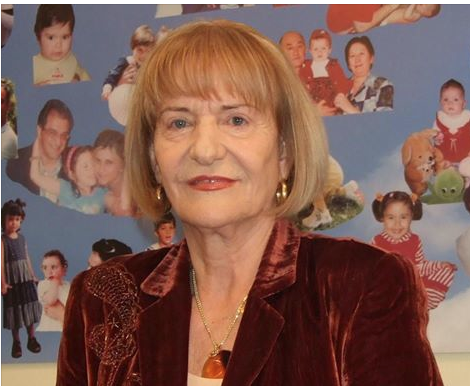
Azota Popescu, Founder and Director of Asociatia Catharsis, has worked tirelessly over the last twenty years to provide day-respite services to the blind and visually impaired and to advocate for better services for the disabled people in her community. She has also worked tirelessly to advocate for the rights of Romania’s 60,000 abandoned, institutionalised children. In line with the governments recent policy changes to domestic adoptions and their campaign; ” A Family For Every Child” , which aims to have no children living in institutions in Romania by 2020, Asociatia Catharsis are now are Registered Adoption Agency and, in accordance with government legislation, are able to provide the following essential services.
Catharsis Association Brasov, Romania and private body public interest
Reautorizată is to carry out activities and services in the field of domestic adoption as follows:
Activities for families who want to adopt a baby:
– informing families / individuals expressing their intention to adopt, documentation required to, and the domestic adoption procedures;
– preparing for adopters informed parental role;
– information and counseling adopters on the necessary legal steps disclosure, under the law, natural identity baby’s parents and, where appropriate, necessary contact or biological relatives by child;
– family or adoptatorului assessment in order to obtain adoptatoare attestation / family person to adopt one or more children.
Activities for children who have been or will be adopted:
Specialist Nurse for that child has not been able to identify a suitable adoptatoare family, where the adoption of the child adoption failed or stopped;
– drawing material information addressed to children on procedures, and the effects of adoption;
– Adoptatului and preparation advice for achieving its contacts with parents and / or natural biological relatives;
Natural activities for parents and extended family of children who have been or will be adopted:
– insurance expert assistance the adoption termination;
– advising and training natural parents and / or biological relatives for achieving contacts with adopted.
Adoption: post activities
– information and advice for parents and children;
– organising courses for parental capacity development;
– formation of groups for parents and children;
– supporting adopters to inform the child about adoption;
– advice on revealing adoptatului parents identity / natural biological relatives;
– advice and preparation adoptatului / parents / natural biological relatives to contact.
Adoption services internal
– information and promote domestic adoption awareness in order to / beneficiaries and needs increased domestic adoption by organising meetings, conferences, communications, media campaigns, editing of publications.

Asociația Catharsis Braşov, organism privat român şi de utilitate publică,
este reautorizată pentru a desfăşura activități și servicii în domeniul adopției interne, după cum urmează:

Activităţi destinate familiilor care doresc să adopte un copil:
– informarea familiilor/persoanelor care își exprimă intenția de a adopta, cu privire la documentația necesară, la demersurile și la durata procedurilor adopției interne; 
– pregătirea adoptatorilor pentru asumarea în cunoștință de cauză a rolului de părinte;
– informarea si consilierea adoptatorilor cu privire la demersurile legale necesare dezvăluirii, în condițiile legii, a identități părinților firești ai copilului și, după caz, necesare contactării acestora sau a rudelor biologice de către copil;
– evaluarea adoptatorului sau familiei adoptatoare în vederea obținerii Atestatului de persoană/familie aptă să adopte unul sau mai mulți copii.

Activități destinate copiilor care au fost sau urmează să fie adoptați:
-asistenta de specialitate a copilului pentru care nu s-a putut identifica o familie adoptatoare potrivita, în cazul în care demersurile de adopție ale copilului au eșuat sau adopția a încetat;
-întocmirea unor materiale de informare adresate copiilor cu privire la procedurile, demersurile și efectele adopției;
-consilierea și pregătirea adoptatului pentru realizarea contactelor acestuia cu părinții firești și/sau rudele biologice;

Activități destinate părinților firești și familiei extinse a copiilor care au fost sau urmează să fie adoptați:
– asigurarea de asistență de specialitate în situația încetării adopției;
– consilierea și pregătirea părinților firești și/sau a rudelor biologice pentru realizarea contactelor cu adoptatul.

Activități post adopție:
– informare și consiliere pentru părinți și copii;
-organizarea unor cursuri pentru dezvoltarea capacităților parentale;
– constituirea de grupuri de suport pentru părinți și copii;
– sprijinirea adoptatorilor în vederea informării copilului cu privire la adopția sa;
– consilierea adoptatului în vederea dezvăluirii identității părinților firești/rudelor biologice;
– consilierea și pregătirea adoptatului/părinților firești/rudelor biologice în vederea contactării.

Servicii în domeniul adopției interne
– informarea si promovarea adopției interne, în scopul conștientizării problematicii/nevoilor beneficiarilor și creșterii numărului adopțiilor interne, prin organizarea unor întâlniri, conferințe, comunicări, campanii de mediatizare, editare de publicații.

Azota Popescu; Founder and President of Association Catharsis, Brasov, Romania.
http://www.catharsis.org.ro
e-mail: office.catharsis@yahoo.com
azotapopescu@yahoo.com
Phone/Fax: 0040 268 324888
Mobile: +40.722.295.282
Address: Braşov, 16th Toamnei St.,
Romania, Postal code: 500223

Fostering; by Jonquil Graham

1979 038

My beautiful picture

Jonquil Graham is an orphan advocate and founding member of Inter-Country Adoption New Zealand, an author, wife, mother to numerous adopted and foster children and mentor to young adult adoptees.

She wrote ” How Many Planes To Get Me ”, her story of adopting nine children from Romania and Russia.

Proceeds from the sale of her book help support an orphanage in Romania.

In this heartwarming, down to earth and inspirational article, Jonquil shares the challenges, joys, and unconditional love which are an integral part of a foster parent’s journey.

Fostering.

Most people get a toaster, linen or cutlery as a wedding gift. We were given a three year old child on our honeymoon whose parents were going through a messy custody battle.

Since she was my niece, we readily agreed, expecting it would be a temporary arrangement. She was a middle child, somewhat neglected, which played out in her behaviuor. Tiny, blonde and extremely active, there was something not quite right about this vulnerable child who needed firm, loving boundaries. She screamed, was a bed-wetter and ran around the house until she was exhausted. We were mystified by her challenging behaviour.

Often, I soothed her by wrapping her in a blanket, rocking her on my knee, sometimes gently humming or reading a story. Clearly, this little moppet had missed out on vital bonding. When I took her to playgroup, the teachers looked at me as if I was the cause of odd behaviour. She would climb into a play bassinette and suck her thumb. I was inexperienced. I didn’t know why she did that. I couldn’t give them an explanation except to say we had taken her on and doing our best as new parents. Looking back, I am grateful to have had this experience. She laid a foundation of what we could experience when we continued fostering and eventually adopting. Most of the other foster children were slightly easier, but we still had many ups and downs.Our first child returned to her birth family after ten years but was in for a rude awakening.. By then she was a teenager. And teens are hormonal and still vulnerable. She went through difficult times but remained in contact although she was living in another country. Today, she has a family of her own and is serene. She is unlike the little girl we nurtured. She gives us hope that foster children who absorb the basics of loving family structured life can heal. They can remember safe, fun, family time, and thus provide that for their own children later. We remain close and visit when we can, which includes her siblings.

We hadn’t considered fostering initially but we went on to foster more children, even after we started adopting. Unable to have our own children, any child was a blessing and we looked forward to parenting them.

We mainly fostered sibling groups because they were offered to us. After all, we had a large, old house in the country and plenty of space with trees and swings and a creek. Idyllic. We thought there could be behavioural problems after discussions with the social worker, but we were optimistic and addressed issues as they arose. Most of our foster children were aged between three and fifteen.

When fostering, there is a honeymoon period. You are keen to provide a safe, happy home for the child, the children you have are excited about a new arrival and everyone is in a party mood. The euphoria only lasts days. Some children become obnoxious and test you. Their behaviour comes from their frustration, their grief, separation from family and testing the boundaries. The children already in our family never resented another foster child. The new kid was a source of fascination. Depending on the age of the child, our own children were co-operative in sorting out toys and making up a bed. I didn’t tell them the reasons for a child staying with us temporarily. My job was to make the child feel safe and wanted. We didn’t quiz the new arrival. Social Welfare provided some background information so we would be aware of food allergies, behavioural alerts, that sort of thing. One child wanted to change his name, so we went along with that, until he decided to revert back to his Christian name. This alarmed Social Welfare, not his teacher, and today he is a well-adjusted, successful young man who calls in periodically and invited us to his wedding. He is like another son to us.

It is heartbreaking when estranged parents promise to visit , then don’t turn up. The child stands excitedly at the front gate looking at the traffic, only to be let down again. We would give lame excuses for them and reward the child with a treat or distraction; whether it’s popcorn and staying up a bit later, making marshmallows over a bonfire outside, playing spotlight with our torches or putting on an impromptu  concert for the whole family. I found that the best way to get a bruised and tired child to sleep was through music. My husband rigged up a music system for the bedrooms upstairs and every night, a child selected a classical C.D. so music wafted into their bedrooms. They never had sleep problems whilst getting their fill of Bach, Brahms, Mozart and Chopin.

Once, I had a family of four siblings who refused to go to bed at the appointed time. It affected the other children. I suggested they do running races up the back lawn. My husband held a stop-watch and timed them. They loved it and within a short time they were all tired and happy to go to bed with thoughts of being a successful athlete. It was my way of changing irritable negative behaviour into a positive without causing friction. You need to be inventive. I knew taking on other people’s kids wasn’t going to be easy so I’d be adaptable, not a pushover.

Teenagers were harder to foster because they’d suffered some abuse, usually, and they wanted to be in control. They were upset being separated from their birth families, however negligent, and of course all teens are hormonal. Once we found out their interests, we’d engage them in activities they likes. Our circle of friends widened, for instance, if they went to a particular church group, then we’d go. It was to give continuity to their past life.

One foster teen daughter was so obnoxious I was on the verge of giving up. My husband reminded me that was in her best interest for now to be with us. So, could I change my attitude towards her? How? Treat each new day like a cassette tape or a book. Turn the tape over or the page over and start afresh. Often this worked. Don’t dwell on past negative behaviour. The kid has moved on and I could too. I found this particularly helpful advice I’d never considered. Also I was grateful that he was supportive and felt the children’s needs were vital compared to me being upset by their temporary meltdown.

At this time we were offered a Fijian toddler to adopt, but my husband said our commitment was towards these foster children as other people also wanted to adopt him. He said our foster children were our priority until their family situation improved. I was a bit upset, but later we were offered a Rarotongan baby. To foster or adopt, you have to both be in agreement. For instance, I had a seven year old. He was going to be adopted by a couple and he liked the new father-to-be who did boy-things with him The mother wanted to nurture him but he didn’t want to be close to anymore. The dad gave him space. It caused conflict because she wanted a little baby to love. The adoption failed because the parents were in conflict.

You can never make a foster child love you; their loyalty is towards their family. How often do people say, “I could never foster. I’d get too attached to the kid and would find it hard to give him/her back.” We never felt like this. We knew the rules. Our happiness was watching them blossom, knowing one day they’d fly the nest when their home situation improved. They knew they always had a place in our hearts. And still do.

Copyright; Jonquil Graham.  http://www.jonquilgraham.com

TO MY FOSTER CHILD; A Poem By Megan Simmonds

You are my child, with tousled hair

And fresh, scrubbed face, sleeping there.

Your well-loved toys around your head,

Your battered slippers on the bed.

I could creep out

Just leave a smile,

But perhaps I’ll sit here for a while.

I’ve kept you warm and fed and dry,

I’ve wiped the teardrop from your eye.

We’ve fought, we’ve laughed

Through bad through good,

But most, I hope, you’ve understood.

You gave me love, a hug, a smile.

Yes, perhaps I’ll sit here just a while.

Tomorrow, you will leave with Mum,

Uncertain whether harder times will come.

It’s not enough to love and feed,

For, deep down, it is Mum you need.

It’s harder now to raise a smile.

I’ll just sit here and watch you for a while.

There will be another when you have gone,

But, just like losing my unborn,

Each child’s a person, different, new,

So I will shed a tear or two.

It is good you are sleeping,

For I can’t smile.

I’ll just sit here and weep a while.

You are so loved, but you are not mine.

In a way, I am yours, so that’s just fine.

I chose to give you of my heart,

To share, to help and then to part.

So, though you’ll barely wave, I’ll bravely smile,

And continue to love you for a long, long, while.

Copyright ;  Megan Simmonds.

Photo courtesy of annie-spratt; Unsplash


Searching For Birth Parents

15463404-mmmainProfessor Victor Groza, with over twenty-five years promoting best practices in child welfare in Romania and adoption research, kindly provided the following links and comment regarding adoptees searching for birth parents. I hope that you find this, as well as other informative posts by Professor Groza helpful.

The U.S Department of Health and Human Services; Child Welfare Information Gateway has many excellent articles of a generic nature, including this one; ” Searching For Birth Parents”.

s (https://www.childwelfare.gov/topics/adoption/search/childsearch/).

Professor Victor Groza-
”There should be professional services in place to prepare adoptees and birth parents for a search, to support them during the process, and to help them after a search is completed–whether or not it is successful.  Our practice model in the US is that search is a normal part of development for some adoptees.  Females tend to want to search more than males and not all adoptees search.  For those who do, there needs to be extensive support.  That includes letting them know that in the eyes of their poor families, they are seen as wealthy. The birth family may feel entitled to the adoptee and for the adoptee to support them, even if they abandoned her or him.  That is why search should not be undertaken lightly.   Here is the link to  the Adoption Network-Cleveland’s website about search (http://www.adoptionnetwork.org/) ; they have a protocol they follow for search and reunion.”


The Romanian Town’s Revolution


The 2-hour Revolution in a small Romanian town

The 1989 Revolution that marked the fall of Communism  in Romania, seen through the eyes of a couple living in Zalau, the smallest county capital.

On the morning of December 22, 1989, Zalau was covered in silence and in an inappropriate spring. Zalau is a small city in northwestern Romania, where Viorica Mesesan and Ilie Mesesan met, got married, received an apartment from the State, gave birth to a child and then experienced a Revolution.

Ceausescu had held his last speech on December 21, 1989, in front of millions of burning heads, deaf to his words (or maybe for the first time actually listening), and on December 22, at noon, he and his wife climbed in the helicopter and ran away. Viorica and Ilie went to work that day like on any other normal day .

Viorica, 35 back then, was working for the municipality in a building right next to the central square. She and her colleagues were gathered in the main hall that day, in front of a TV, watching mesmerised what was going on there. She remembers Ceausescu’s last speech, promising to raise children’s allowance by 100 lei and Dinescu, announcing that Ceausescu and his wife ran away. Two of her colleagues took Ceausescu’s portrait, threw it on the ground, stamped on it and then ran out of the building to the central square, trying to convince other people to join them. It was the portrait of a person no one had even dared to make a joke about before, which now turned into little glass pieces. Her husband Ilie, 34, remembers too such an image: different portraits of Ceausescu, flying out of the windows and breaking down on the alleys of the factory where he was working.

The morning silence which was covering the city was only a deceiving one. There was a great tension hiding behind that silence which exploded when the announcement was made that Ceausescu ran away. Those in factories stopped their work and formed a march to the center of the city. Around 3,000 women and men, taking advantage of the almost spring-like winter that year, singing and shouting among radio announcements, walked to the central square (in picture). Ilie was among them and he perfectly remembers the enthusiasm he was feeling then. An enthusiasm his wife doesn’t recall. She only names fear and confusion among the feelings. “I cannot say that we were very enthusiastic. We didn’t really know what was happening and what kind of consequences this would have on us,” remembers Viorica.

The people gathered in the central square waiting to see what will happen. Who – and what – will come next. The secretary of the county, a woman called Maria Stefan, tried to talk to the people, but they refused to listen to her. They were only receptive to the speech of the Army Commander, who assured them that no fire was shot or would be shot, that he gave orders to the Army not to interfere with the population. In the end, indeed there was no gun shot. At least Ilie remembers it that way and his wife too.

But Ilie’s cousin, Nelu, a communication engineer, remembers the story differently. He was called in those days by the secret police (Securitate) to do some interceptions and he recalls perfectly the gun shots, which stayed in his mind for some months after everything ended. But memories are vague and history is just a collection of these memories.

Ilie remembers that they were gathered in the central square when they heard the news at some loud speakers. “The Ceausescus were caught in Targoviste. They are being held at the Military Section number…from Targoviste. Please stay calm, there will be a law suit”.  He tells it exactly how he heard it that day, using the present tense, like it would happen now. Those were words with such a great impact, words he has never forgotten and have stayed with him for 25 years. The heroes of the day in the small city of Zalau were the figures talking to the people gathered in the central square. They were different factory managers, professors, mostly people who had the power to influence, to capture trust, to assure their place in the new order. Patriotic songs, flags with the communist symbol cut out showed everywhere, loud speakers bringing news, this was the 2-hour gathering in the central square and the short Revolution in Romania’s smallest county residence, Zalau. Then people returned to their houses and followed the Revolution on TV.

The TV is the central character in the memories of those days. Ilie remembers that he couldn’t move away from the TV, being mesmerised, incapable of reacting to any other stimulus. „What was happening there was hugely important. We could not afford to skip any information, any image,” recalls Ilie. Viorica was constantly moving between the TV, the kitchen and their 2-year old baby. It was only two days before Christmas and she had to prepare ‘sarmale’, the traditional Romanian food. “Our little girl was crying all the time, maybe she felt in some way the tension and pressure, my husband was effectively stuck in front of the TV, I asked him many times to help me, but he didn’t react, he did not move from there”.

The news, the rumours, the figures were pouring from TV amidst the preparations for the Christmas, the cooking, the cleaning, and taking care of the child  The rumours were the most tormenting thing, because nobody could tell what was true and what was false. „They were telling us not to drink water because it may be poisoned, that there were terrorists  shooting  everybody, we were so afraid a civil war would break out,” recounts Viorica.

And then on December 25, the things finally settled down. It was the Christmas day and after a short lawsuit, which was broadcasted on TV, Ceausescu and his wife were shot to death by a military squad.

Both Viorica and Ilie still remember the noise of the guns shooting at the Ceausescus, and still recall some images of Ceausescu and his wife lying on the ground and then in their coffins, dressed in their winters coats.

„Kids, kids, please behave, people, please” and „I refuse to talk to anybody else except for the Great National Assembly” were the words of Elena and Nicoale Ceausescu during the trial. Words that Ilie still recalls at the present tense. He thinks it was very wrong to kill them.
„First of all it was the Christmas day and you don’t do something like this on Christmas day. Secondly they were not alone, there were so many people beside them that should have been also judged and only afterwards a sentence to be passed,”  comments Ilie.

”It was suddenly all silence. I am being honest to you, I felt relief, I too was afraid a civil war would break out. I may be wrong, but I guess the majority wanted them killed. We felt they were bad people. Or maybe they made us believe that way through the images they were showing us on TV,” recounts Viorica.

New heroes were proclaimed or maybe proclaimed themselves that way. Ilie and Viorica were watching on TV how a new world was settling in. The Ceausescu trial, the foundation of the new party, the new leaders. Some of them were familiar. Most of the things that confused them and brought about fear in those days were never resolved. „Nothing could be proven. Everything remains a mistery,” comments Ilie.  Nobody has discovered any single terrorist. A few Army Commanders were prosecuted but almost everybody escaped. The people that talked in the central square of the small city Zalau did find a place in the new order.  And the TV got and more important with every day more.

By Diana Mesesan, features writer, diana@romania-insider.com

(the two  main characters of this feature are the writer’s parents

Asociatia Catharsis Brasov – Romania

Screen shot 2016-03-04 at 2.54.56 PMAzota Popescu; Founder and President of Association Catharsis, Brasov, Romania.
http://www.catharsis.org.ro
e-mail: office.catharsis@yahoo.com
azotapopescu@yahoo.com
Phone/Fax: 0040 268 324888
Mobile: +40.722.295.282
Address: Braşov, 16th Toamnei St.,
Romania, Postal code: 500223

the Catharsis Association of Brasov
is a Romanian legal person of private law, legally acknowledged under the status of public utility without any patrimonial mission. The association was founded on January 17, 1996, according to binding legislation, that is: Bill No. 21/1924, Decree No. 31/1954, Bill No. 77/1994. In addition, it had 26 co-founding members, all of whom were important local personalities, including six psychologists, four physicians, four teachers, two social workers, two lawyers, two electrical engineers, two students, an anthropologist, a sociologist, an artist and a priest.

Mission Statement:

Respecting and promoting children’s rights; Reducing the number of institutionalized children;  Encouraging family-related alternatives by:
– reintegrating the child in his/her natural family or, where possible, in the families of immediate relatives;
– placement with professional foster parents;
– identifying suitable persons/families wishing to adopt children or to take minors into foster care;

Social integration of teenagers who, upon turning 18, must leave the protective institutional environment; Improving living standards for special needs children and families with precarious social and financial situations;

Alleviating the pain of terminally ill children and teenagers, and changing the evolution of the diseases where possible;  Encouraging positive thinking and nurturing feelings of human solidarity;

Developing and extending a network of dedicated volunteers;

Initiating and developing local and foreign partnerships with the purpose of ensuring the financial support for and the implementation of our projects;

Collaborating with government institutions, public authorities, and local and foreign non-governmental organizations dedicated to protecting children’s rights and providing social services.

The principles that underpin our work are transparency, equal opportunity, nondiscrimination, honesty, and sincerity.

The Catharsis Association is accredited by local and central authorities, according to binding legislation, in order to provide the following social services:

Specialized social service consisting of support and assistance for families and children in dire social and financial needs;

“Urgent actions meant to alleviate the consequences of critical situations”  Primary social service consisting of counseling for:
– individuals or families that adopt children or are accepting minors into foster care;
young women who are dealing with unwanted pregnancy;
children and teenagers with deviant behavior.

All the services are being provided free of charge by an interdisciplinary team of experts.

The expenses incurred by our projects have been covered by our partners from Italy, Ireland, France, Germany, the Netherlands, the Czech Republic, the United States, Hungary, as well as by individual and corporate sponsors from Brasov and Bucharest.

“Vrem o Românie fără orfani” – Conferință Internațională
Palatul Parlamentului, Sala Avram Iancu
18 noiembrie 2015
orele 14:00 – 18:00

Children in Romania Live in Extreme Poverty

United Nations Human Rights – Office of the High Commissioner for Human Rights

Photo credit; Francine Aubry

This extract is from the End of Mission Statement on Romania by Australian Professor Philip Alston, United Nations Human Rights Council Special Reporter on Extreme Poverty and Human Rights.

4. Children

The situation of Romanian children, especially those in rural areas, warrants serious attention, for the levels of poverty, social exclusion and material deprivations to which they are exposed are simply unjustifiable in an upper middle income country like Romania. Among the Romanian population at risk of poverty, children are the hardest hit group. According to the Eurostat, 48.5 percent of children are at-risk-of poverty or social exclusion, which is the second worst score in the EU, and 34.1 percent reportedly suffer from severe material deprivation. The situation of children in rural areas is dire and the risk of poverty for those children is three times higher than those in urban areas. I have personally witnessed the conditions in which children in rural areas live in and the challenges they face on a day-to-day basis.

What I believe is crucial in reversing this trend is access to education, which is not only a fundamental right of the child, but also a crucial premise on which other related human rights, such as the right to work and the right to participate in public life, may be realized. However, the percentage of Romania’s GDP spent on education is revealing. The low level of expenditure on education has ripple effects. While the authorities maintain that compulsory education is provided to all children for free, there are consistent reports on “hidden costs” of education, which effectively hinders access to education by families with limited financial resources. Such costs may include, for instance, supplementary tuitions, school supplies such as textbooks, notebooks and pencils, and school uniforms. The burden is particularly onerous on families living in rural areas, given the large disparity between rural and urban areas in terms of budgets allocated and spent on education.

Children living in poverty have much less chance of remaining in the school system and acquiring quality education. According to the highly-respected National Authority for the Protection of Children’s Rights and Adoption, the drop-out rate for children in compulsory education is 2 per cent year, but this figure does not provide an accurate picture as it is based on an analysis of the number of children at the beginning and the end of compulsory education. I received reports suggesting the early school leaving rate is as high as 17.3 per cent and the rate is particularly high for Roma children. Even worse, I have met children in the heart of Bucharest who have never been to school for a variety of reasons, including the lack of a birth certificate or an identity card, poverty and illness. From the State’s perspectives, those without birth certificates are “invisible” children who do not exist. They have never had a birth certificate or identification document in their lives, never been to school or never been offered support from the State. The legal procedures to obtain a birth certificate are extremely cumbersome, time-consuming and costly, often requiring a lawyer and a range of documentation including forensic evidence to prove the age of the child.

What is paradoxical is that while there are a large number of children who fall through the cracks of the education and social welfare system, institutionalization of children seems to play a significant role in filling the gaps. The families that I spoke to in Bucharest often spoke of the fear that the local council may take away their children and I have also received information indicating that poor families are often persuaded to send their children to residential institutions so they are adequately fed and taken care of. According to the official figures, there are 37,126 children in family-care settings, 20,887 children in public residential institutions, and 4,043 children in private residential institutions. Strikingly, 40 per cent of those children enter the institutions because of poverty. Furthermore, although Law No. 272/2004 prohibits institutionalization of children under the age of three except those with a “severe” degree of disability, the information that I gathered suggests that the definition of “severe” disability is often discretionary in practice and many small children with minor or no disabilities are often institutionalized. The children in the institutions often end up staying there until they become adults, at which point they may be transferred to residential institutions for adults. There is a critical need to prevent children from entering into the institutions in the first place or to at least ensure that institutionalization is a temporary measure of a last resort.

Recommendations

a) In view of the fiscal space available, the Government should increase its spending on education to reflect both EU standards and domestic law. Increased spending should be allocated to local authorities, particularly focusing on those with limited resources with a view to reducing the regional disparity.

b) The process of issuing a birth certificate should be simplified, so that it is a straightforward administrative procedure that can be undertaken on a free-of-charge basis.

c) The local authorities should provide services and support to the families at the community level in order to prevent the institutionalization of children. The central Government should allocate more resources to the local authorities for the purpose of enhancing the capacity of social workers and providing professional training so they could provide effective early intervention services.

d) The Government should consider the establishment of a Children’s Commissioner, who is tasked with a broad mandate and power to protect children’s rights and equipped with adequate resources and capacity to maintain his/her independence.

5. Fiscal policy and poverty

It would be reasonable to assume that the inability of the Romanian Government to deal adequately with these challenges is a result of budgetary constraints. But the fiscal reality actually tells a very different story. With a flat rate income tax of 16%, Romania has the most regressive tax system in Europe. In other words, a political decision has been taken not to increase the net effective tax rate for individuals with higher incomes relative to those with lower incomes. Thus the opportunity to increase tax revenue to support increased spending on anti-poverty measures has been foregone. In addition, effective tax collection rates are low and widespread tax evasion and corruption further reduce revenue intakes. Even in successful anti-corruption contexts, the amount recovered from the proceeds of corrupt conduct is estimated at only 5-15% of the assets subject to a court order. This undermines the impact of sanctions and does not generate the appropriate revenues for the state. Moreover, Romania has only been able to make use of available European structural funds at a relatively low level, thus leaving much funding untapped.

Despite all of these missed opportunities, Romania could have had even greater fiscal space to fund social reforms. Instead, it has adopted inadequately evaluated and questionable policies of reducing VAT from 25% to 19%, and doubling the child allowance, which have eliminated much of the space for broader, more progressively targeted, reforms. In other words, the dismal state of social inclusion is a result of deliberate policies that reduce funding that could otherwise be available, while channeling what is available to the better off in the society.

The paradox is that Romania has, on the one hand, under the influence of external funders, adopted a plethora of strategies designed to put in place the building blocks for a social democracy, or welfare state. Some of these strategies are excellent and almost all are necessary. But on the other hand, the state’s macro-economic policies seem to signal a rather different orientation. Some of my interlocutors spoke of neo-liberal assumptions aimed at minimizing both taxation rates and social protection, while facilitating wealth generation without regard to redistribution. Instead of social or citizenship rights, the dominant discourse was one of equality of opportunity, as opposed to affirmative action.

– See more at: http://www.ohchr.org/EN/NewsEvents/Pages/DisplayNews.aspx?NewsID=16737&LangID=E#sthash.SqRe5H4u.dpuf

Up-date; 10-02-16 Romania’s government today launched an anti-poverty package, which aims to reduce the number of people at risk of poverty by at least 580,000 by 2020.

According to the Prime Minister, Dacian Ciolos, some 1.7million children are currently at risk of poverty.

The State Of Orphanages In Eastern Europe and the Post-Institutionalised Child

This article talks about four key areas-  The Physical Effects on the post-institutionalised child

The Effect on socio-emotional intelligence.

The Effects on Linguistic Development

The Legacy of Institutionalisation on Mental Health.

The Effects of Institutionalization on Children

Introduction

Institutionalization of orphaned and unwanted children has been a long-standing Western tradition, and only in the last century has society begun to realize the damning ramifications of the practice on children. This form of care still remains common in a few former Soviet countries, tragically condemning children to a life of stunted development. This article, then, will tackle the effects of institutionalization of children in former Soviet countries in particular, starting first with the history of institutionalization practices the typical institutionalization experience is like in former Soviet orphanages, and then its profound effects on physical well-being, intelligence, and socio-emotional development.

The State of Orphanages in Eastern Europe

Historically, orphanages in Western cultures have followed the “medical model” approach to childcare—namely, that good caretaking consists of meeting a child’s basic physical needs, with little emphasis on caregiver affection and the attachment needs of children. Most developed Western countries moved away from this model in the 1950s, after the pioneering work of John Bowlby’s attachment theory and Harry Harlow’s work with monkeys showed that healthy attachment is essential for normal development. However, both institutionalization and the medical model approach remains prevalent in former Soviet countries, with several hundred Russian orphans still living in orphanages. Infants in these orphanages are fastidiously kept for, well-groomed and well-fed, but human interaction is minimal. Infant-to-staff range anywhere from 8:1 to 35:1, meaning that infants receive only a bare minimum of human interaction. Frequently, they are frequently left in cribs for a good majority of the day and only receive interaction with staff when their basic needs, like feeding and bathing, are met at predetermined times, and the rest of the time, they must lie in their own feces and urine. Staff members rarely hold or cuddle infants, and they routinely ignore crying, both due to policy and due to the sheer number of other children they must attend to. With so many children to manage, individual needs are ignored, prompting a report by Case Western Reserve University to call the orphanages “warehouses.”

The actual orphanage environment is no more stimulating. Groza, Ileana and Irwin described typical orphanages as “colorless, shockingly quiet and devoid of any of the usual visual or auditory stimulation,” and recalled one orphanage in which the 4-year-old children there had never once left the room assigned to them. Many orphanages lack proper schools and provide no educational or entertainment material for the children to peruse, meaning they must provide their own stimulation. Punished for being “hyperactive,” many children end up simply doing nothing at all. The sight of children staring blankly into space for lack of anything better to do is tragically common.

The Physical Effects of Institutionalization

The physical effects of such a deprived environment have been long noted. The noted nineteenth-century pediatrician Henry Dwight Chapin, for instance, discovered that there is a significantly higher infant mortality rate in institutions, even when infants were otherwise healthy, and this mortality rate was so high in 19th century orphanages that the term “hospitalism” was coined to describe the common plight of orphaned babies. At one Romanian orphanage, most children were below the 20th percentile for height and weight, rendering them more vulnerable to disease. Officials there estimated that mortality rates in the winter could be as high as 40%, and on any given year, about half of the children died within the first 24 months after arriving at the orphanage. Children who do manage to survive typically suffer stunted growth, generally at a rate of one month’s delay for every three months spent in an orphanage. Growth stunting for some children is so severe that they can be diagnosed with “psychological dwarfism,” a phenomenon in which emotional or abuse disrupts the secretion of growth hormones and stunts normal growth. It is not unheard of for such children to grow three to four inches in just a six-month time span after being adopted. While most health problems resolve within a year of adoption, children nonetheless remain smaller than their non-adopted peers throughout childhood. The longer the orphanage stay, the shorter the child tends to be for their age.

Complementing this physical stunting are motor skill development problems, like possessing low muscle tone and not demonstrating age-appropriate motor skills. One study found gross motor delays and fine motor delays in 70% and 82% of Russian children, respectively. Like the other physical effects mentioned above, these motor skill problems resolve themselves in more stimulating environments.

The Socio-Emotional Effects of Institutionalization

Of course, the effects of institutionalization do not limit themselves to merely physical development. Indeed, the greatest legacy that institutionalization leaves is on children’s socio-emotional development. Perhaps the most well-documented effect is on attachment. John Bowlby noted that all children need a stable, responsible caregiver to attach to; without one, a child is set up to have difficulty with relationships later in life. By definition of being institutionalized, however, children in orphanages do not have a caregiver to attach to, as staff members work on shifts, may switch jobs, and have other children to care for—there is no one dedicated long-term to an individual child.

Generally, children who are institutionalized after the age of two and have had quality care during their infancy are not terribly affected by this indifference, but children who enter institutions before the age of one tend to do quite poorly. These children realize early on that no one particularly cares about them. Infants in nurseries are eerily silent, a direct result of learning early on that their vocalized distress will never be rewarded with attention. They frequently fail to attach to anyone, and, unused to physical contact, are highly sensory and tactively defensive and recoil from human contact if it is given. Unlike normal children, they become even more upset when someone tries to console them and prefer to “cry it out” by themselves, as that is how they are accustomed to doing.

Infants who present ambivalent and avoidant attachment to caretakers often go on to present characteristic disordered attachment styles later in life. The most common relational style seen in institutions is known as “indiscriminative friendliness.” Starved for affection and used to an ever-changing rotation of caretakers, these children seek affection inappropriately from everyone and anyone, including complete strangers. However, other children completely give up on soliciting affection from unresponsive caregivers and cease to be social altogether, instead developing what is known as “institutional autism.” Although not actually autistic, these children develop stereotypically autistic behaviors, like rocking, head-banging, stereotyped behaviors, and bizarre rituals, seemingly as a way of providing some stimulation in their own, otherwise sensually barren lives. Unlike autistic children, they stop this sensory-seeking upon placement in a more enriched environment.

These disturbed attachment styles, unfortunately, frequently persist after adoption. A full third of adopted Romanian children demonstrated avoidant attachment to caregivers, and an even higher percentage had only ambivalent attachment. Often, the most indiscriminately friendly children violently unravel in a post-institutional environment and become aggressive and controlling, deregulated by the lack of structure and the constant showering of warmth and affection they were denied for so long. Many attachment disordered children do eventually recover, but a significant minority of cases is eventually diagnosed with reactive attachment disorder. The prognosis for reactive attachment disorder is generally fairly poor, especially for older children. After a certain critical point of development, it seems, children simply cannot develop the capacity for normal, warm human relationships.

Related to the problem of attachment is social skills development. According to John Bowlby, if children are institutionalized for too long, the child will lose the ability to interact with other humans in a normal way. In one study of Romanian children, it was reported that while most parents were concerned that their children were too withdrawn and avoidant within the first year after adoption, after a few years, children’s greatest social problems were externalized. Parents frequently complained of aggressive, manipulative behavior and difficulty getting along with peers. The longer children had lived in an orphanage, the greater parents reported their difficulties to be, and the worse the impairment in intelligence, the worse the child’s social skills tended to be. Another study on Romanian children found that an astounding 55% of preschool-aged children were unable to demonstrate developmentally appropriate social skills like meaningful eye contact. Some children are so profoundly deficient in social skills that they arguably lack any sort of conscience or feelings for others at all and instead present symptoms of sociopathy.

The Effects of Institutionalization on Intelligence

Yet another well-documented, deleterious socio-emotional effect of institutionalization is intellectual disability. By school-age, a majority of Russian children living in orphanages are diagnosed with “oligophrenia,” a vague descriptor in Russia for “general mental deficiency,” and a study of internationally adopted children showed that upwards to 50%-90% of preschool-aged children had developmental delays upon arriving in their new country. Many children had multiple delays, usually in motor and language skills. Similarly, in another study of Romanian children, every single child in the study was developmentally delayed upon arriving in Canada and frequently tested into the borderline mentally retarded range. The more time a child spends in an orphanage, the more profound the intellectual impairment; for every year that a child spends in an institution, his cognitive development will be delayed by about six months.

Some of this damage is observable at the biological level. Total brain volume is significantly negatively correlated with time spent in an institution. The hippocampus in particular shows markedly decreased volume, which research has demonstrated is due to overproduction of cortisol, a hormone released in stressful situations. Repeated release of cortisol in stressful situations, like that of neglect in orphanages, destroys the hippocampus, which is central in learning and memory. Damage is not limited to the hippocampus, however; FMRIs of formerly institutionalized children have revealed that the prefrontal cortex tends to be both immature and reduced in volume, which leads to problems with impulse control and decision making. Accordingly, then, children do particularly poorly on tests measuring visual memory and attention, learning visual information, and impulse control.

Fortunately, most children usually make rapid gains in intellectual development upon removal from the institution environment. However, the legacy of institutionalization often lingers, as the precipitous drop in intelligence institutionalized children experience is not entirely reversible even after being placed in an optimal adoptive family environment. Three years after adoption, children in one study had only very modest gains in intelligence, and most scored in the low average IQ range. The longer a given child lives in an institution, the worse his intelligence tends to be, especially if the child has lived there since infancy.

Linguistic Development in Institutionalized Children

With no one talking to them, it hardly comes as a surprise that linguistic development is severely retarded by institutionalization, too. Language delays, in fact, are the most commonly diagnosed problem in post-institutionalized children. Children learn from interacting, not from passively hearing others, but this is exactly the opposite of what institutionalized children doing. Glennen discovered in an observation of a Russian orphanage that when language was spoken in the presence of children, it was usually between caregivers, and on the seldom occasion a child was spoken to, it was typically in the form of simple commands. Most activities, like meals, were conducted in almost complete silence. Accordingly, with no opportunity for actual practice, about 60% of 2 1/2 institutionalized children in one study had no expressive language whatsoever, and at age 3 1/2, only an astounding 14% were capable of speaking two-word sentences. Nonverbal communication skills are often no better; children’s skills tend to be either minimal or negative in nature, like hitting. Deficient language development is one of the hardest effects of institutionalization to undo; after certain critical linguistic periods are missed, no amount of intervention will ever fully remediate a child’s language deficits. A child’s rate of acquisition, then, literally determines his capacity for language later in life.

The Legacy of Institutionalization on Mental Health

Finally, institutionalization leaves individuals with a significantly hiked risk of mental illness and disturbed behavior. So common is disordered development that a specific mental disorder has been suggested specifically for post-institutionalized children, known as Developmental Trauma Disorder. This disorder is hallmarked by what is known as “mixed maturity,” in which children demonstrate normal maturity in some areas, but act like a much younger child in other areas. Academic skills, depth and appropriateness of relationships, and social skills tend to be more representative of those of a younger child. Frequently, these symptoms will mimic those of ADHD and PTSD’s, with poor social skills and hyperactivity. The stress of repeated traumatic events, such as institutionalization, changes the make-up of the central nervous system in such a way that children are biologically conditioned for a heightened fear/stress response. Children are maladaptively hypervigilant as a result, and because they frequently misperceive totally innocuous events as threats, they present immature, aggressive, and socially inappropriate behavior. The inability to pay attention and the hyperactivity is directed related to the degree of neglect, and is unrelated to low birthweight, nutrition, or intellectual disability.

Unsurprisingly, the prospects for children who are not adopted from these institutions is often grim. Of the approximately 15,000 children who grow out of Russian orphanages every year, the Russian Interior Ministry University estimates only about 20% are successful post-institution—10% commit suicide, 30% end up in jail, and 40% end up homeless. The cycle of child institutionalization tends to repeat itself, with many orphanages reporting that they have children who are the third or even fourth generation to have been institutionalized.

Adoptees do better, but still struggle, as these problems follow them even after they leave the orphanage. In her landmark study on institutionalized Romanian children, for instance, Ames noted that children frequently try to apply maladaptive behavioral strategies learned while in the orphanage to their post-adoption lives. Many children, for instance, engage in behaviors like stealing, manipulating, fighting, and lying, because doing so earned them extra attention or food in orphanages. Similarly, as testament to their highly regimented, unstimulating lifestyle, children can be highly dependent on others telling them what to do, often for years after adoption. Many cannot determine for themselves when to stop eating, and one study recounts that some children will lie in bed quietly for hours until prompted to get up.

Although many of these behaviors disappear as children acclimate to a stable post-adoption life, many other behaviors persist. Even in the best of adoptive environments, adoptees suffer a rate of mental illness about 70% higher than the general population. Their difficulties are not necessarily due to poor genetics, either; adoptees from China and Korea, which eschew institutions in favor of foster care, experience mental illness at a rate three to seven times lower than adoptees from former Soviet countries, which use institutions. Indeed, 72% of parents in Ames’ study of Romanian children cited their biggest concern with their children not to be anything physical or intellectual, but socio-emotional. More than a third of the children in the study needed professional help for behavioral problems several years after adoption. Children who are older at the time of adoption, who experience abuse, and who have multiple changes in caregivers were more likely to have problems. The most common problems included conduct disorder, antisocial behavior, poor relationships, and affective disorders.

Clearly, as has been demonstrated, institutionalization has a profound impact on every aspect of a child’s functioning. The gross amount of neglect, both physical and emotional, causes severe damage that is not always possible to undo, and the longer the time spent in the institution, the worse the effects. The vast majority of children never get adopted, meaning they languish in stunted emotional, cognitive, physical and social development forever. While there is hope for those who do get adopted, the effects of institution more often than not leave a damning legacy.

References

Ames, E. (1997, Fall). Orphanage experience plays key role in adopted Romanian children’s development. Retrieved fromhttp://www.nacac.org/adoptalk/orphanageexperiences.html

Aslanian, S. (2006, September 16). Researchers still learning from Romania’s orphans. Retrieved from http://www.npr.org/templates/story/story.php?storyId=6089477

Delaine, L. (2000, May 1). The plight of Russia’s orphans. Retrieved fromhttp://www.russianlife.com/blog/plight-orphans/

Federici R. (2007, July 18). The neuropsychology of bonding and attachment disorders. Retrieved from http://www.rainbowkids.com/expertarticledetails.aspx?id=57

Federici (2008). Raising the post-institutionalized child risks, challenges and innovative treatment. Retrieved from http://www.drfederici.com/raising_child.htm

Gindis, B. (2005, December 23). The second glance at institutional autism in internationally adopted children. Retrieved fromhttp://www.adoptionarticlesdirectory.com/Article/The-second-glance-at-institutional-autism-in-internationally-adopted-children/81

Gindis, B. (2011). Navigating uncharted waters: School psychologists working with internationally adopted post- institutionalized children. COMMUNIQUÉ, 27(1), Retrieved from http://www.bgcenter.com/communique-article.htm

Gindis, B. (2012, March 12). Internationally adopted child: Navigating between PTSD, ADHD, and DTD. Retrieved fromhttp://www.adoptionarticlesdirectory.com/Article/Internationally-Adopted-Child–Navigating-Between-PTSD–ADHD-and-DTD/184456

Groza, V. (1999, October). US policy promotes institutionalization of children in Romania. Retrieved fromhttp://msass.case.edu/faculty/vgroza/international/adoption/uspolicy.htm

Groza, V. (n.d.). Interview by A Martin [Web Based Recording]. Adverse impacts on children living in orphanage institutions. , Retrieved fromhttp://www.adoptvietnam.org/adoption/health-institutional-impacts.htm

Groza, V., Ileana, D., & Irwin, I. (n.d.). Dickens, Boys Town or purgatory: Are institutions a place to call home? Retrieved fromhttp://www.comeunity.com/adoption/institutionalism2.html

Meese, R. (2006, May 1). A few new children: Postinstitutionalized children of intercountry adoption. Retrieved fromhttp://www.adoptionarticlesdirectory.com/Article/A-Few-New-Children–Postinstitutionalized-children-of-Intercountry-Adoption/920

Nalven, L. (2004, October 1). The impact of early orphanage life on development. Retrieved from http://www.rainbowkids.com/ArticleDetails.aspx?id=218

Nalvin, L. (2004, October 1). The impact of early orphanage life on development. Retrieved from http://www.rainbowkids.com/ArticleDetails.aspx?id=218

Noble, K., Tottenham, N., & Casey, B. J. (2005). Neuroscience perspectives on disparities in school readiness and cognitive achievement. The Future of Children, 15(1), Retrieved from http://futureofchildren.org/publications/journals/article/index.xml?journalid=38&articleid=117§ionid=768

Russian Orphan Opportunity Fund. (2011, November 14). Life in the orphanage. Retrieved from http://www.roofnet.org/orphanage_life

Sanghavi. (2010, April 25). Adopted boy’s return highlights problems in Russian orphanages. The Washington Post. Retrieved from www.google.com/url?sa=t&rct=j&q=&esrc=s&source=web&cd=9&ved=0CHkQFjAI&url=http://www.washingtonpost.com/wp-dyn/content/article/2010/04/23/AR2010042302223.html&ei=c8DgT63RKabN0AHfndGCDg&usg=AFQjCNEXAcSC6PDnzbeVxF9ZrYSHAMHhcg&sig2=29QZV_ZKz-gaTEY4JTXn9w

Society for Research in Child Development (2010, February 5). Length of time in institutional care may influence children’s learning. ScienceDaily. Retrieved June 27, 2012, from http://www.sciencedaily.com­

The New Zealander Who Went Through Hell To Adopt

Screen Shot 2020-05-09 at 10.36.34http://www.romania-insider.com/new-zealander-adoption-comunism-romania-adele-rickerby-promise/158933/

By Diana Mesesan.

The New Zealander who went through post-communism hell twenty-five years ago to adopt a Romanian baby.

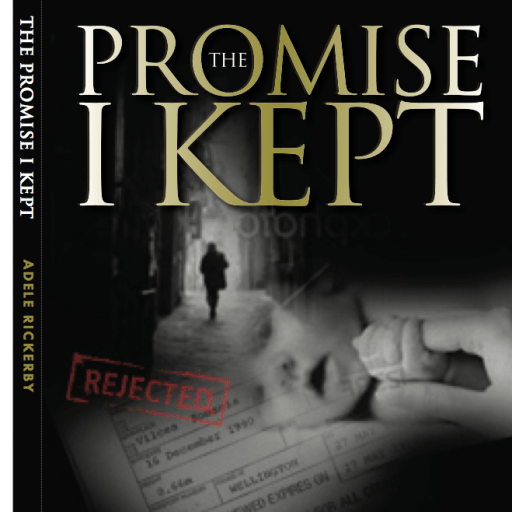
Adele wrote in her memoir, ”The Promise I Kept”; You wake up one morning to the sound of history knocking loudly, impatiently, persistently at your door. To answer it is to take a leap of faith into your future.

Adele Rickerby went through the hell of early post-communism to adopt a girl from Romania.

As the plane was flying over Brisbane, an Australian city set on a wide, beautiful river, one of the mothers gathered at the playgroup pointed out to the plane and told her little daughter: “We came on a plane like this one when we returned from Romania.”

The woman was one of Australians who adopted a kid from Romania in the early 90s. Several people living in Brisbane, whose kids were born in Romania, started a playgroup, so that the children would get together regularly. They’ve never kept it a secret from them that they were adopted.

Adele Rickerby, a New Zealander who moved to Australia after she got married, would also bring her daughter to these playgroups. She felt like she had a special bond with the couples that went through the same experience. They were an extended family for each other. For Adele, adopting a child from Romania was not an event from the past that simply went forgotten as years went by. Instead she would think every single day about her six weeks in Bucharest in the early spring of 1991, as she was struggling to adopt a baby girl. After she semi-retired, due to a surgery on her back, she found the peace and time to sit at a table and write down her thoughts. This is how “The Promise I Kept”, her book on adopting a baby girl from Romania, was born.

Romania allowed international adoptions until 2001, when it placed a moratorium on the practice. It officially banned these adoptions four years later. But even domestic adoptions go through only with great difficulty. Last year, only 840 children were adopted in Romania, despite that fact that the country had over 58,100 children in the special protection system at the end of March this year. The big problem lies in the complicated laws which define when a child is “adoptable.”

Adele Rickerby herself had to overcome a number of limitations to adopt the baby, she tells me during our first Skype discussion. Her voice is very warm and a bit nervous. It is the end of summer here in Bucharest, but the beginning of spring in Australia. Her Romanian-born daughter, who is now in her 20s, helped her install Skype. Adele laughed about it. “I have a reputation for being bad with technology.”

When Adele came to Romania to adopt the baby, after she had seen the terrible images of Romanians kids in orphanages, it was late winter. Bucharest, which had just come out of the Communism era, was gray and felt unsafe. Many kids were sold illegally in those early days of freedom, and the rumours about a moratorium were everywhere. Adele was afraid that she would not be able to get through with the adoption. But spring was slowly making its way.

April 1991: The winter train ride between Budapest and Bucharest

In April 1991, Adele Rickerby took the plane from Australia to Frankfurt. She had a luggage full of documents, which were necessary for the adoption. Back in Brisbane, she left her 6-year old daughter, which she hugely missed, and her husband. Their marriage was kind of falling apart. She was planning to take the plane from Frankfurt to Romania, but when she arrived in Germany, there were no free seats for that weekend. Instead of waiting a few days for the next flight, she booked a train from Germany, which passed through Austria, Hungary and then reached Romania. She had this strong sense of urgency, that she needed to get faster to Bucharest.

Everything went well through Germany and Austria. However, soon after the border with Hungary, Hungarian soldiers got on the train and asked for her passport. Then they ordered her off the train and threw her luggage out of the window. It was 4 o’clock in the afternoon and she didn’t wasn’t sure where she was.

Adele had no choice but to get off the train, and the train left without her. “I was just standing there in the afternoon, not knowing what was going on.” She went to the wooden train station and waited. Then a man who spoke English and was well-dressed approached her and told her that he was the local taxi driver. He could help her get a visa for Hungary, then take her to the train station in Budapest so she’d catch the same train. “We will get to the border and we will get a visa for you. The same train leaves Hungary at nine o’clock at night. I will make sure you are there on time,” the man told her. She then paid 350 dollars to this stranger to drive her across Hungary. She had the feeling that the man and the soldiers which got her off the train knew each other and were part of a scheme. But what could she do about it?

“I got in the taxi. It was getting dark and we started to drive through the back streets of this village. Where are we going, I asked him. I need to get petrol, he replied, which was fair enough. I had no choice but to trust him.” She sat in the back of the car. The man started talking about his wife and family, while Adele was looking out of the window. The Hungarian villages and town they were driving through looked particularly disheartening in the dim winter light. After she finished her nursing training in Australia, Adele did a lot of travelling around the continent with her husband. “I was like, I’ve done a lot of travelling, I can cope, but nothing could prepare me for the shock of Hungary and Romania.”

It was just getting darker and colder, but they made it and arrived at the railway station at Budapest. They found an empty carriage, the man threw her suitcases and her sleeping bag, and then he left. Within 15 minutes the train left too.

She spent all night just travelling the rest of the way into Bucharest. It was very dark, and every time the train passed through a little town, officials would get on the train, come to her carriage, look at her passport, at her visa, then go through her luggage, searching for contraband.

“We’d go through villages that were very poor; a light bulb in this village, a soldier with a rifle just walking on the platform. It was still a lot of snow on the ground, the end of winter; a peasant man’s jacket made out of of sheep’s skin.”

At about 8 o’clock, when the train was getting closer to Bucharest and Adele was tidying up her belongings, taking her sleeping bag off, three well-dressed man came into her carriage. One of them was an engineer for the railway station and was on his way to a meeting. He could speak English and asked her was what she doing there. “I said I was adopting a baby girl.”

She remembers the main saying: “Our country is poor, but our hearts are rich.” Then the train finally arrived at the Gara de Nord railway station. It was early in the morning.

May 1991: The promise
The only person Adele knew in Bucharest was a Catholic woman called Mihaela, who had hosted other couples from the US, New Zealand and Australia willing to adopt babies from Romania. Adele knew that going through the whole process would take about six weeks. The law gave the adoptive mother the opportunity to change her mind within this period. She was planning to do the adoption as a New Zealander, because the Australian Department of Immigration had rejected her request to adopt from Romania.

She phoned Mihaela, who was in holiday, but luckily hadn’t left Bucharest, so she picked Adele up from the railway station. After so many hours of uncertainty and fear, Adele felt desperate for a shower, a hot meal and conversation with English-speaking people. She found another couple from Australia in Mihaela’s house. Adele wrote in a diary during her six-week stay in Bucharest, describing her experiences. It later became the source of her book “The Promise I Kept.”

In those speculative days after the fall of communism, Romania had several people who worked as intermediaries between foreigners wanting to adopt kids and state institutions. Some were willing to intermediate sales of children. With 20,000 dollars one could buy a baby on the black market. Some were decent people, who spoke English and grabbed the opportunity to make some money. The man who helped Adele get through all the process was a doctor, who was well-educated and spoke English. She paid him a small fee. But these go-between persons weren’t the only ones asking for cash. Sometimes even the birth mothers would demand money, even if they had given up their children. However, Adele didn’t go through that. The mother of the girl she adopted was a very young girl herself, living in a small apartment in Ramnicu Valcea, with her parents, a brother and a sister. They had no money and no way of supporting the newly-born kid. It was also the stigma attached to being a single mother. Poverty and the blame passed on to single mothers forced many women to abandon their children during communism and afterwards.

Adele met the mother and her family in their apartment, where they had a meal. It was very emotional for both parts. Adele thinks that maybe the grandparents were even more distressed about the whole thing, because they understood the enormity of it, while the mother was still very young. But the girl did tell Adele that she wanted her daughter to have a future, so Adele promised her she’d give her daughter a future. “And that’s the promise I kept,” she said. “25 years later, the daughter is very beautiful, has a wonderful partner. She is a pharmacy assistant, and she has a lovely family and home.”

Then she met her future daughter, who was in an orphanage. A nurse held the baby up to the window. “She was four-month old and she was really cute,” Adele said. The judge, who had the final word on the adoption, said yes, and Adele finally had the little girl in her arms.

The Mother
One year after returning to Australia, Adele divorced and had to raise her two daughters by herself. “I had whole sentences that I wanted to write down, but I was really busy and I didn’t have the opportunity.” But two years ago, she had to give up work, due to a surgery on her back. She rented a little unit and went away by herself for several months to write her book. It was really difficult revisiting the whole experience, she said. “It was one stage where I couldn’t finish it. And I had to leave it for about 6 weeks before I ended it.”

After she finished the book, Adele was approached during book launches by Romanian adoptees, who didn’t understand why they were left and abandoned.

Several Romanian kids who were given for adoption are now trying to find their families. There are even Facebook groups, where they share their experiences. The media has immediately picked up the topic, searching for emotional stories. But for some of the adoptees, this can be a traumatic experience. They discover all sorts of terrible situations and they are tormented by the question of why they were given up for adoption. “They are trying to pull their lives together but in the meantime they also feel this burden of responsibility towards their birth families,” Adele said. Her own daughter was once approached by a newspaper interested in her experience. But she said no. “I’m not gonna do that so that they’re gonna have a story.”

Adele lives with her Romanian-born daughter, so she still gets to hear “Mom, can you do my washing?” or “What’s for dinner tonight, mom?”. The girl works a lot, but she has Fridays off and they go out and have coffee together. Her older daughter now lives in another city, but not too far away.

Adele shares a very close bond with the other adoptive couples from Brisbane. They’ve organized trainings about adoption, they’ve set up this playgroups for kids, they’ve spent Christmas together over the years. Adele was once talking with a couple from England, who also lived in Brisbane. “When do you get over Romania?” they asked themselves. “But you can’t get over Romania. You can’t have an experience like that and not change your life. You can’t live superficially,” Adele said.

Adele has now been living in Australia for 30 years. She is not very close to her family in New Zealand. “My mother died when I was not even 13. I don’t think we were close when we were growing up. I like to say that mothers have a glue that bind us together and when my mother died, the family fell apart. I think that’s the truth,” Adele says. Then she pauses for a while, and adds: “Maybe that’s why it meant so much to me to adopt a child. I know what it’s like not to have a mother.

The Promise I Kept 2020 Revised Edition is available on amazon as a paperback or kindle edition.