
Project Hope for the Children Inc.

Curious, I emailed Ramona Petrella Cummings, Founder and Executive Director of P.H.F.T.C.Inc. and asked her to tell me some things about her charity. This is her reply;

I moved to România în 2003 for a six month tour, working under a non profit organization in their private orphanage. During my time there, I was introduced to the local pediatric hospital where social babies who were either orphaned or abandoned were warehoused. I was told I could do anything I wanted to with the babies , but the hospital had nothing to aid with their care for me to use. No soap, no disposable diapers, wipes, creams, formula etc. I wrote home and asked my supporters for funds to buy these basic baby essentials and $750 came in. I started buying supplies and with the help of two friends we bathed, lotioned, changed, fed, and loved on these little ones. Many screamed at human touch or at bath time or just being lifted out of their cribs. It wasn’t initially very peaceful or happy, but after several weeks we started to see a difference. After returning home, I decided to keep trying to raise money for this cause and that found me returning every 6 months to work with the babies and buy supplies for the hospital. Soon, other people and foundations started helping in the hospital and I partnered with them by giving them supplies to work with. I turned my ministry into a non for profit about 9 years ago or so. 

Social babies are what the children are sometimes referred to when they are in and out of government care, abandoned, and require social services’ help.

Initially, the abandonment was caused by extreme poverty, lack of jobs for women, Italian men fathering the children and abandoning responsibilities after finding out their girlfriend was pregnant. Mainly, it was due to it being ingrained in the Romanians heads that the communist government took care of things like this. Ceaucescu the dictator, forced people to have children and if they couldn’t care for them they were to put them in institutions for the government to “help” raise. It just became a way of life. The Roma population and their culture also adds to the abandonment issue, with young girls being married off at early ages and having children into poverty and ignorance of mothering. That is mostly the issue now as România is becoming more prosperous and the new generation isn’t ingrained in communism. 

Ramona Petrella Cummings, Founder and Executive Director, P.H.F.T.C.Inc.

P.H.F.T.C.Inc. collaborates with and assists several Romanian Foundations working with the Roma and abandoned children, one of which is; Forget Me Not Ministries Co-op. We heard from Rachel Ross, Executive Director, Forget Me Not Ministries Co-op. This is what Rachel said;

From what I remember from conversations with government social workers in the hospital when we would have 100 abandoned babies or so at a time…they would not classify them as abandoned or social babies as they were not legally “abandoned” as in their parents had not signed away their rights. So, that was one way that they could deny having an abandoned baby crisis or issue…technically…they were not abandoned…even though some had been there for quite some time. But that was back in the day.

The majority of the abandoned children are Roma (gypsy).  

Yes, poverty is a main factor in the cause of the children being abandoned. Over 90% of the Roma face unemployment, so providing for their families can be quite difficult. 

Also, I believe it is a mentality that is left over from communist times as well, when families were encouraged to leave their children with the government and were taxed on having fewer than 5 children. Many Roma families that we have worked with do not consider that they have “abandoned” their child when they leave them in the hospital and are almost offended when I suggest that. They often think of it as receiving help for a few years with their child until they are in a better financial position. 

The only real government assistance I know of is the children’s allowance which parents receive monthly. 718 lei for children up to two years old and 291 lei for children between two and eighteen years old. 718 lei converts to $156.00 U.S and 291 lei converts to $63.00 U.S.

I do not know of any extra assistance for single mothers, only extra allowance if your child has special needs. 

I can say that I cannot think of too many moms at all that are single in the Roma community at least. In their community, it would be incredibly unsafe to stay single and oftentimes they will subject themselves to any kind of relationship, healthy/safe or not, in order to have someone to provide for them and protect them. 

Rachel Ross Executive Director Forget Me Not MinistriesRomaniafmnministries.org

Photo credit; With permission to use from Ramona Cummings facebook page. Have a look at their facebook page, which will also direct you to their website.

How Can You Walk Away?

By Adele Rickerby

The tragedy of Romanian mother’s abandoning their babies.

According to data published on the website of the National Authority for the Protection of Children’s Rights and Adoption, (A.N.D.P.C.A.) two hundred and seventy six babies were abandoned by their mother’s in Maternity hospitals and other health facilities in the first nine months of 2022. Forty-eight less than the similar period in 2021. Of these, two hundred and twenty were left in Maternity wards, fifty-four in Pediatric wards, and two were left in another hospital ward. One hundred and three were returned to their families, two were placed with the extended family, fifteen with families/individuals and one hundred and thirty-four were placed with foster parents.

According to U.N.I.C.E.F Romania, (the United Nations Children’s Fund), one in ten pregnancies in Romania are teenage mothers and that poverty is one of a number of risk factors.
The following reports, Authored by; Andrea Neculau, Diana Negut, Mihai Vacaru and Cristina Vladu states that ”Teenage pregnancy in Romania is a complex social phenomenon”.

  1. UNICEF Romania County Reports on teenage mothers
    1. Policy framework to prevent teenage pregnancy and its consequences
    2. POLICY BRIEF: Prevention of teenage pregnancy and its consequences

Save the Children Romania reports that forty-five percent of the births registered among girls under the age of fifteen in the European Union, of which there are twenty-seven countries, are in Romania. This number is the highest in the European Union. Romania also ranks highest in the E.U. in terms of infant mortality, the main cause being premature births.

In collaboration with the O.M.V. Petrom Foundation, Save the Children Romania have launched the ”Baby Box” program, which aims to reduce infant mortality and support families immediately after birth.

https://www.salvaticopiii.ro/ce-facem/Sanatate/Cutia-bebelusului

According to statistics from the A.N.D.P.C.A. Website, the number of babies abandoned from January to December 2020, was four hundred and thirty-one. The numbers for 2023 are significantly lower.

You can find official statistics at the following link https://copii.gov.ro/1/date-statistice-copii-si-adoptii/ at category „Copii Părăsiti în Unitățile Sanitare”.

Romanian Adoptee Defies The Odds To Complete A Degree

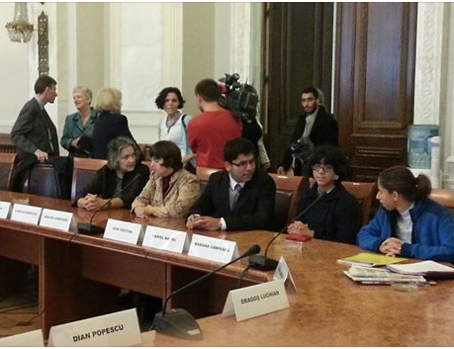
Alex was only eighteen years of age when he made his first trip to Romania to speak to the Parliament to advocate for the reopening of International Adoptions from Romania.

When Romanian orphan Alex Kuch was adopted at age two, his new family was told he would never finish high school or lead a normal life.

This week, Alex finished his final semester of a Bachelor of Arts degree in Politics and International Relations with a minor in Sociology at the University of Auckland.

Now 23-years-old, Alex is an established children’s rights advocate and is invited to speak around the world. Next month, he will co-present research into the experiences of adoptees at a major international conference in Canada.

“My parents weren’t going to let a prediction determine who I was going to become,” Alex says. “While never pushing me, they always encouraged me to give my best in everything I did. My family is really proud, especially as I’m the first person in my family to go to university. I’m really looking forward to using my degree in the real world.”

Alex will be one of the youngest presenters at the sixth International Conference on Adoption Research in Montreal and has received a grant from the University of Auckland’s Vice-Chancellor’s Student Support Fund to attend.

His research, completed with Dr Rhoda Scherman from AUT, analyses the stories of other adoptees shared on the New Zealand-based I’m Adopted website.

“The stories have helped us to pull together the common themes of what adopted children go through. It’s valuable knowledge for agencies and families, for example knowing when to intervene or what to expect, and to provide better support.”

Alex was adopted in 1997 from an orphanage in Cluj- Napoca, Romania by a German couple. He also has a younger brother adopted by the same family. The family moved to New Zealand in 2006.

At the time of his adoption, a German psychologist advised Alex’s family that the emotional damage from spending his formative years in an orphanage meant he would never lead a normal life, complete high school, or have the social skills to integrate into society.

“The conditions weren’t the greatest. My parents were told that I had started to rock backwards and forward due to a lack of emotional and physical stimulation and I could not look people directly in the eyes.”

Alex received specialist support such as speech and fine motor therapy, and against all odds, has now completed high school and university.

“It was challenging, however the University of Auckland has been very supportive. I had a writer for exams as I still have some fine motor challenges. Also many of my assignments were tailored to reflect my advocacy work.”

Alex is passionate about lobbying the Romanian Government to re-open international adoptions, which were closed in 2001.

In an unusual twist, Alex met his birth mother on live television during a lobbying trip to his birth country. While speaking on a talk show about his adoption experience, producers blindsided him by bringing his birth mother and half siblings onto the stage.

Alex is now concentrating on his long-term aspiration is to establish a children’s rights consultancy that collaborates with different sectors to have a positive impact on the wellbeing of children.

In October Alex will speak in Brussels at the third Asia-Europe Foundation Young Leaders Summit on children’s rights and international adoptions.

Danelle Clayton | Media Adviser
Communications Office
Email: d.clayton@auckland.ac.nz